Kili Day 1 – 10th to 12th September 2010

It had been a fairly stressful start to this adventure; I had opted to take the National Express coach to Heathrow, rather than the train like I had done for EBC. Due to traffic, I barely made the change at Milton Keynes. Luckily once I had arrived at the airport, everything went according to plan. As soon as I walked through the ‘departures’ door, I spotted a bloke with a rucksack.

I went over to him and asked where he is heading, he was on the same trip! His name is Harry, from Sussex. Once through security we had the obligatory airport beers at the bar. I was pleased to have met someone on the trip so quickly. Although I went to India by myself two years earlier, it had been with work. Kili was my first true solo adventure, which I was a little apprehensive about.

It was a long flight (close to 24hours), with a change at Addis Ababa, Ethiopia and a short stop at Nairobi, Kenya to pick up more passengers. In Ethiopia, we met up with the other trekkers who would become my travelling companions over the next 8 days. Chatting with them, none had been to high altitude before and were nervous about altitude sickness. It reminded me of my pre-adventure jitters last year.

From Addis Ababa, I had a window seat. The clouds seemed to form animal shapes over the barren and dry ground below. Vast cracks in the earth, stretched across the land where rivers once flowed. The scene from ‘The Lion King’ where Simba is looking to the heavens and seeing Mufasa in the clouds came to mind.

After a bit of some ‘kooky’ flying from the pilot we landed in Arusha, Tanzania. Once the paperwork for immigration was completed, I stepped out into the African Sun (well it was overcast, but none the less, I was finally, for the first time on African soil). I took a deep breath to take in the atmosphere. The dry dusty air caught the back of my throat sending me into a small coughing fit!

The ground is a dry reddish brown, with trees dispersed through tall yellow-brown grassy plains. It lived up to everything I had imagined it to be like.
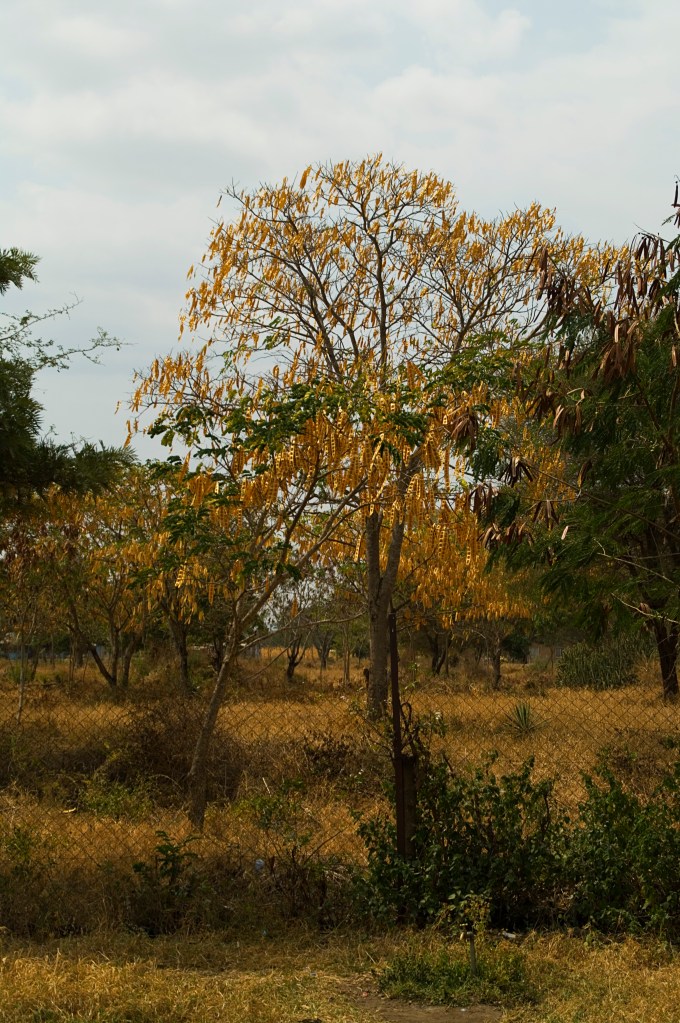
It was a coach ride into Arusha; I was fixated on the scenery. Large dust columns slithered between the trees, as they gave way to the plains. Unfortunately, Kili was obscured by the clouds and haze. We arrived at ‘The Karama Lodge’ hotel, which is set on a wall to a valley. Each room is a wooden lodge on stilts, looking out over the forested valley below.

I sat on the balcony to my lodge, enjoying the cool breeze as it rustled through the trees above and made an entry in my journal. At 7pm I went to the main hotel building for dinner and to meet our guide, William. The next day would be an early start and it will be spent walking through the rainforest that encircles Kili. I couldn’t wait!

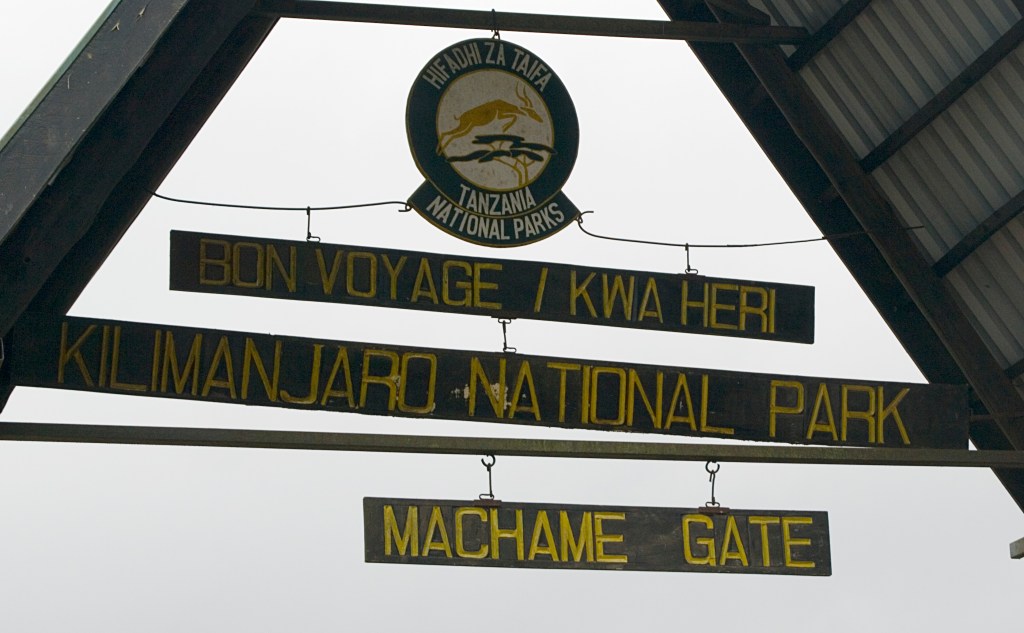
Despite an encounter with a huge spider and the monkeys drumming on the roof of my lodge, I got a surprising amount of sleep. Around 8am we arrived at the ‘Machame Gate’ which marks the entrance to the ‘Kilimanjaro National Park’. There was a light rain, and the air was brisk, perfect for walking.

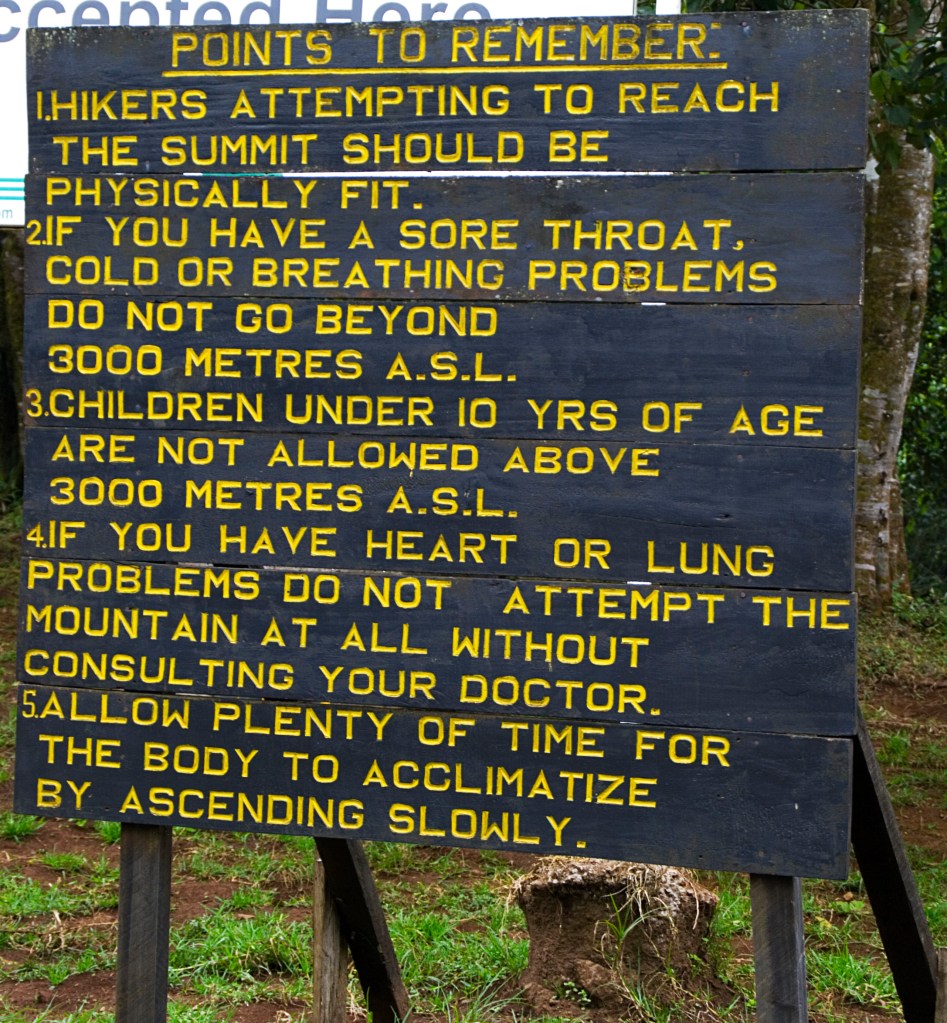
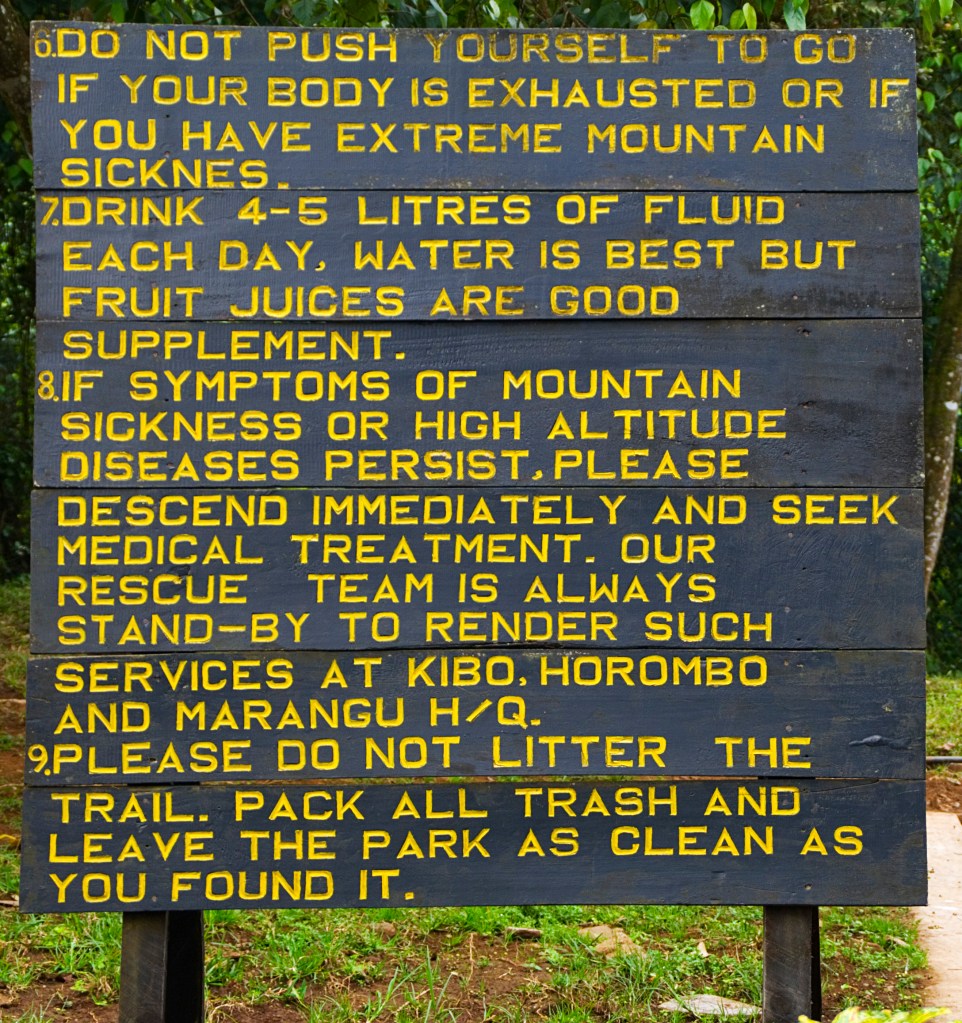
We passed under the pointed arched gate after signing the register, to begin our adventure. There are warning signs about the journey with a list of “Points to Remember”. This hammered home the dangers of high altitude.
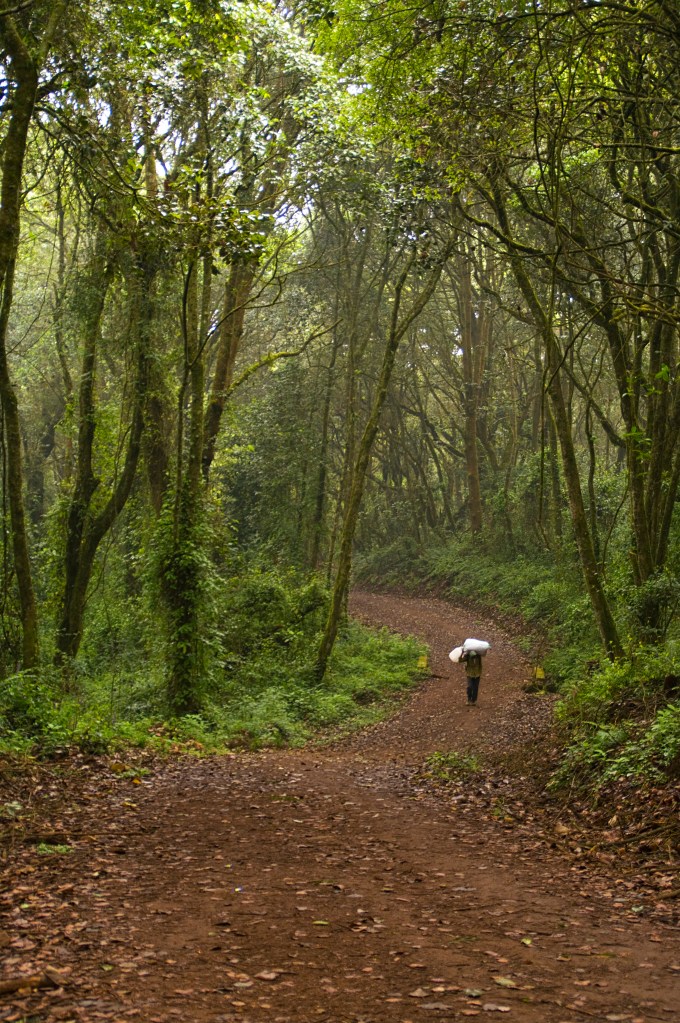
The route was mostly gentle with a few steep sections, but nothing strenuous. The rainforest was peaceful and quiet, the occasional bird or a squawk of a monkey broke the silence. We caught glimpses of their tails as they moved through the canopy above. Every hour or so we would stop for a break and to eat our snacks; it was also then I realised I had left my hand sanitiser back home. An error I would go on to be punished for, further into the adventure.
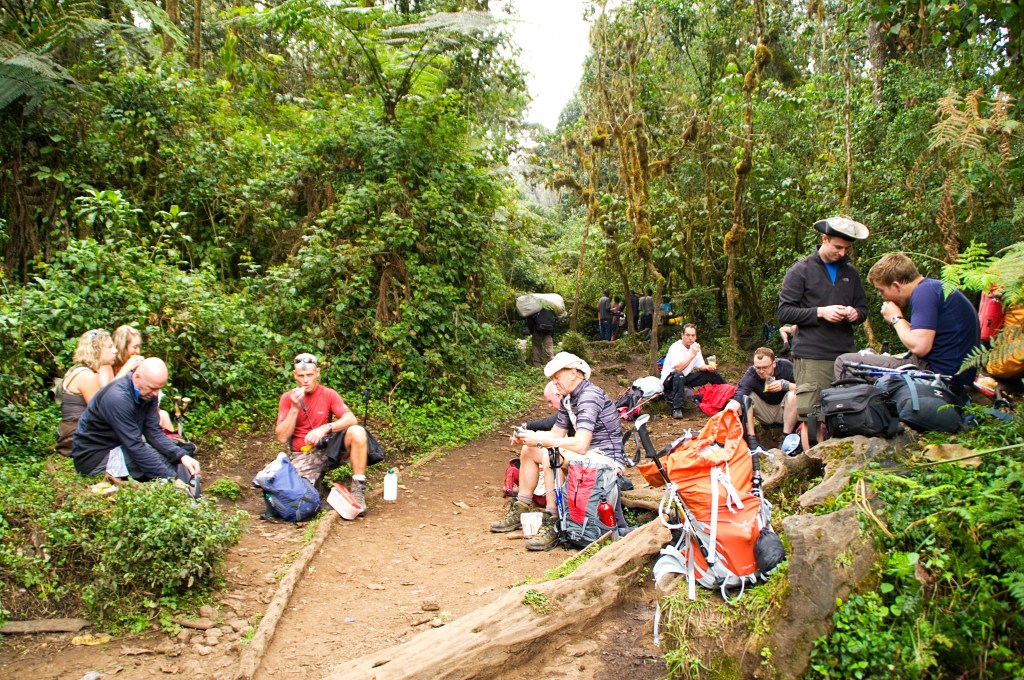
Lunch Time

The clouds remained with us all day, and I had not yet seen Kili at all. We reached Camp 1: Machame Hut (3000m) just before 5pm. My porter ‘Moses’ showed me to my tent, it was nestled between the trees. I had it all to myself, one of the group had paid extra to have their own tent and rooms, which meant I was the odd number; thus, I too had my own tent and rooms.
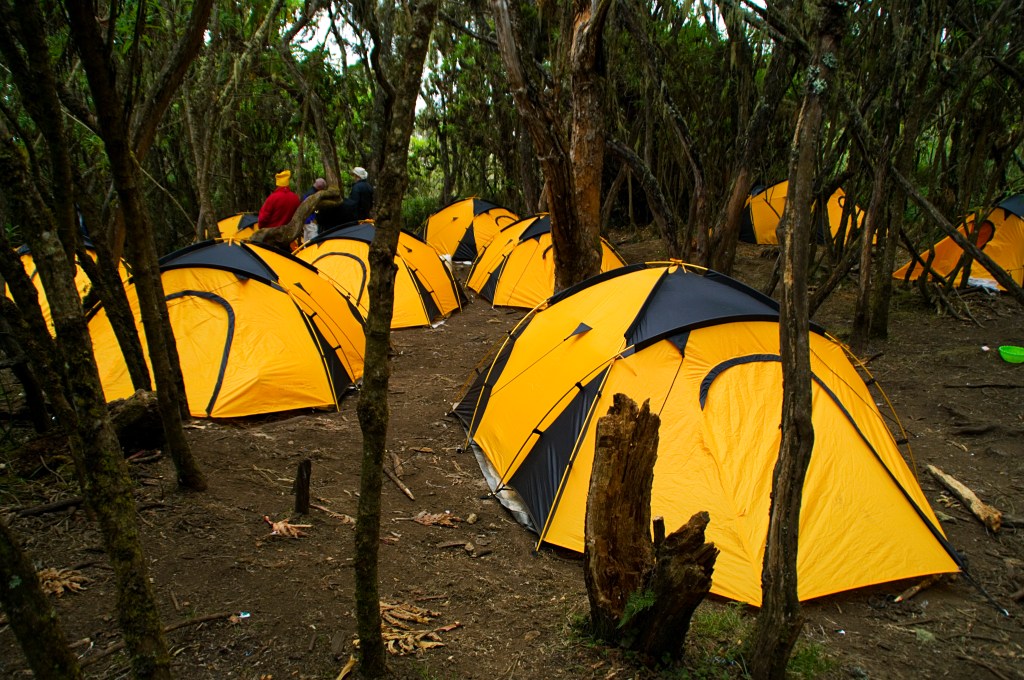
It is bittersweet, as it was good to have my own space, however it felt a little anti-social, and I would have liked to have had company to share the experiences of the day with. At 7pm we had our dinner. This was in a large tunnel tent, where tables had been placed end to end, all complete with tablecloths. We ate by candlelight and listened to the briefing for the next day.
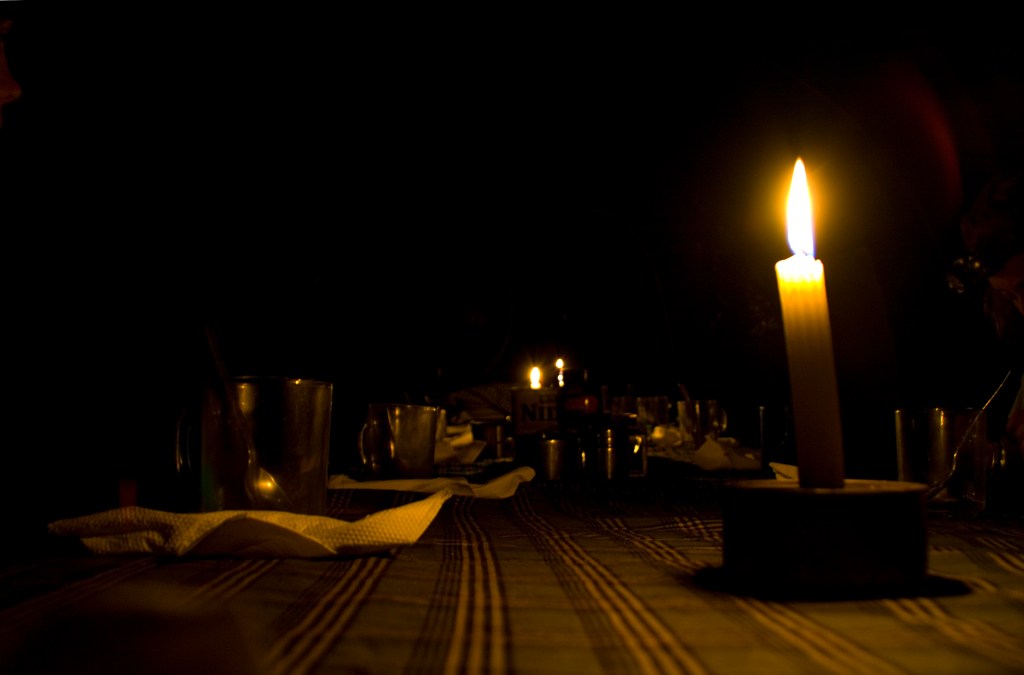
We retired to our tents where I filled in my journal. I had no headache, I felt strong, feeling in a lot better position than I was after the first day on the Himalayan adventure. I just hoped it would remain this way for the rest of the week.
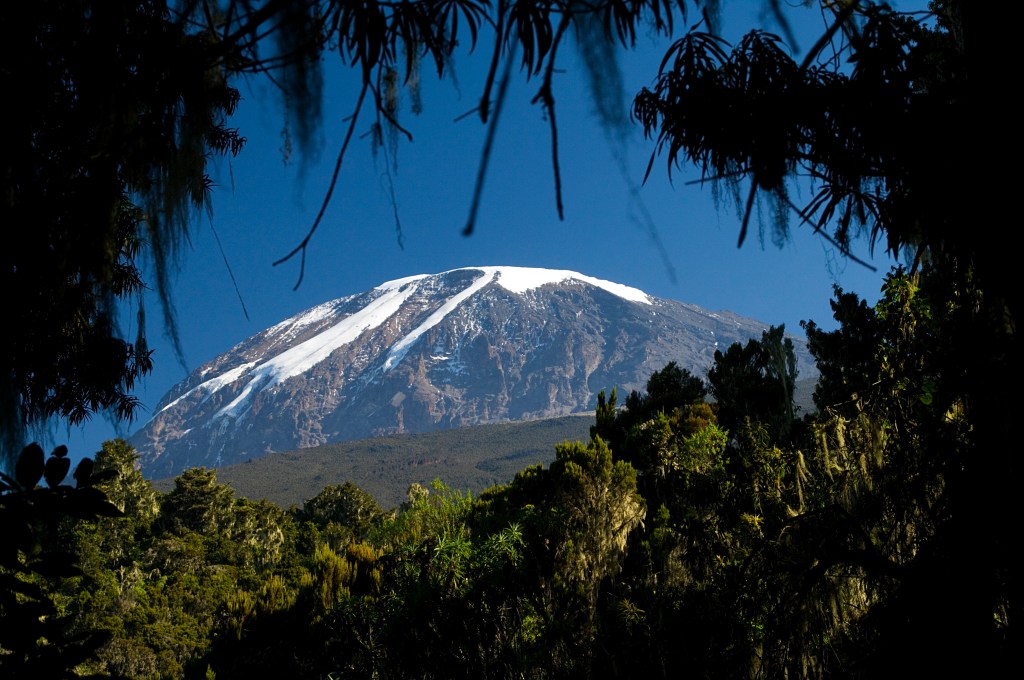
The Roof of Africa

After finishing my Himalayan adventure, I was eager to book another trip, to give me something I can look forward to; I truly had been bitten by the travelling bug. Having seen the tallest mountain in the world, it made me want to climb it, but back in 2009 the cost for a permit was £30,000. Silly money! The Everest group talked numerous times about the ‘7-Peak Challenge’, which is the tallest mountain on each continent.

This grasped my imagination. I wouldn’t be able to get them all done, but that wouldn’t matter. Not many people would be able to say they have done even one of the 7-peaks. So, I looked them up:

  • Europe – Elbrus 5,642m
  • Africa – Kilimanjaro 5,895m (also the tallest free-standing mountain in the world)
  • Northa America – Denali 6,190m
  • South America – Aconcagua 6,961m
  • Antartica – Vinson 4,892m
  • Australasia – Carstensz 4,884m
  • Asia – Everest 8,848m

Everest is a no no, due to the expenditure, and the same for Vinson. Carstensz at the time was in the middle of a civil war. So that left Denali, Elbrus, Aconcagua and Kilimanjaro. The most technical one out of those four is Denali, thus I would need to do some climbing training before tackling that one, but it wasn’t out of the realms of possibility.

Shortly after returning from Nepal, I was offered a place on an Aconcagua ascent in the new year; however, sadly I did not have enough leave left to take up the offer. I looked back on ‘The Adventure Company’ website (the same company I had booked the Everest Base Camp with). They had a package for Kilimanjaro; that settled it for me. I booked it for September 2010.

Unfortunately, I would be travelling this one alone, as my brother Pete didn’t want to undertake any more adventures. This trip would be different to EBC, primarily I would be camping; there are no teahouses on this one. There were still porters to carry the bulk of our gear, as well as the tents. This would also be my first visit to Africa, a continent that has always captured my imagination.

Kilimanjaro sits on the Northeast border of Tanzania and is a dormant volcano. Its iconic glacier stands out above the Serengeti, unfortunately it is predicted to disappear between 2025 and 2035. It has three volcanic cones with the tallest being Kibo, with ‘Uhuru Peak’ the tallest point.

However, the most important aspect of Kili, is it will be my first of the ‘7-Peaks’ and the 12 months following my Himalayan adventure, could not have passed by quick enough!

Welford to Wilbarston

We picked up today from where we left off on the 27th July. The walk in the gale force winds on the peak of Skiddaw hadn’t deterred Hannah from adventuring with me.

The weather was perfect, the low autumn sun was out, the temperature cool and the ground dry, we couldn’t ask for better conditions for mid October!

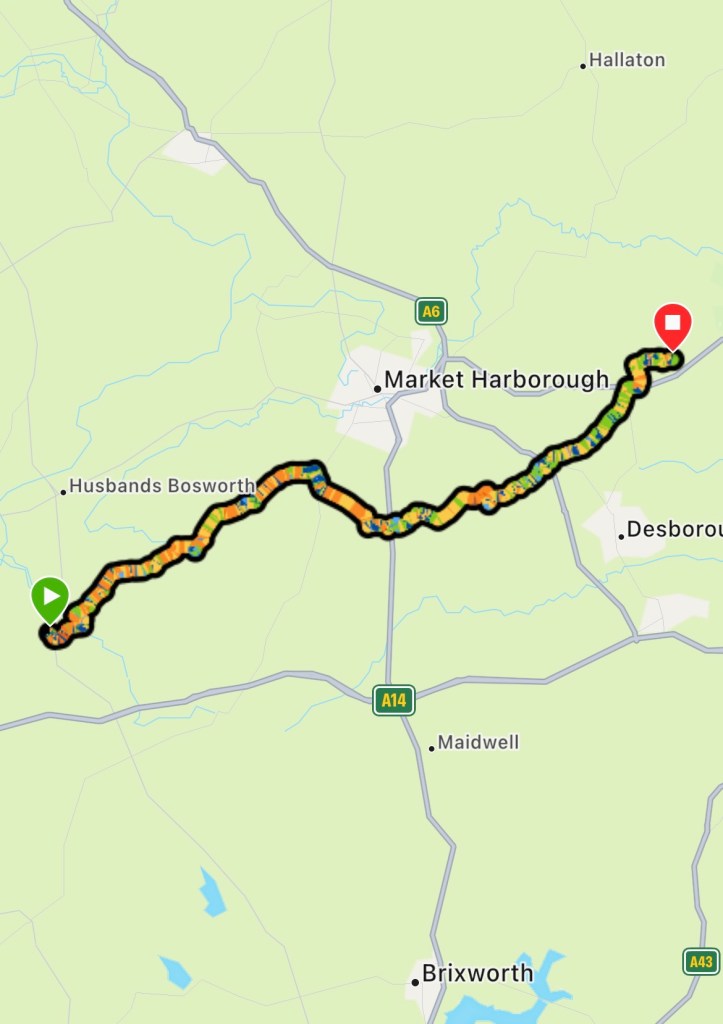
After leaving a car at Wilbarston we returned to Welford to begin our 4th stage of the Jurassic Way.

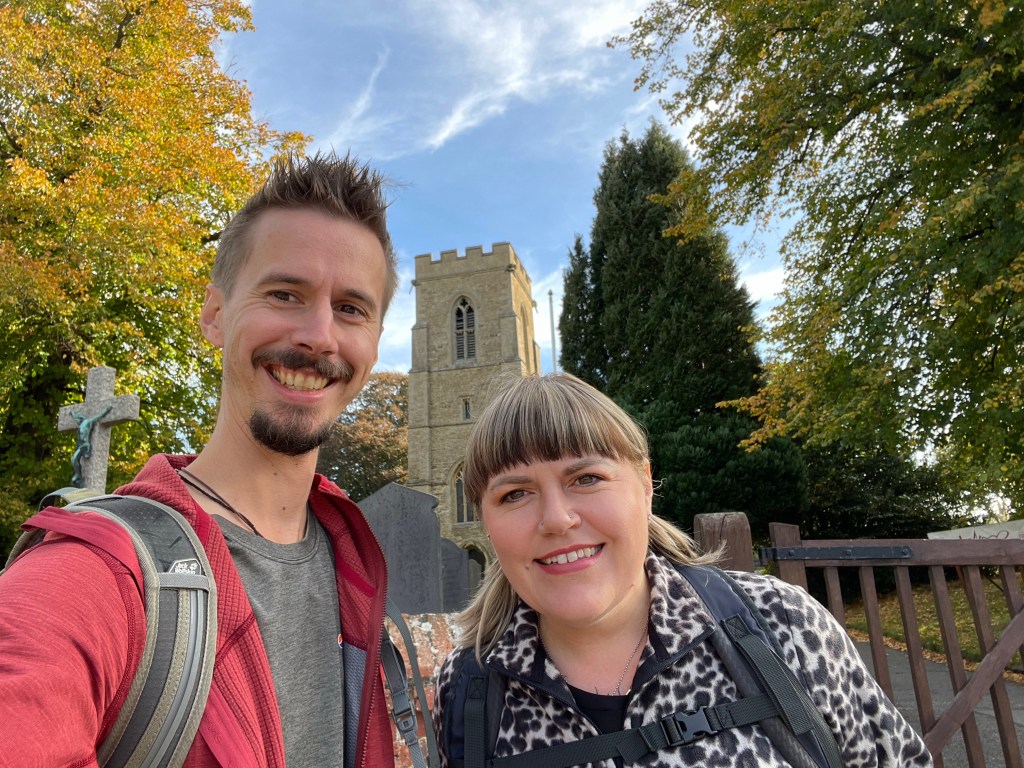
Welford Church

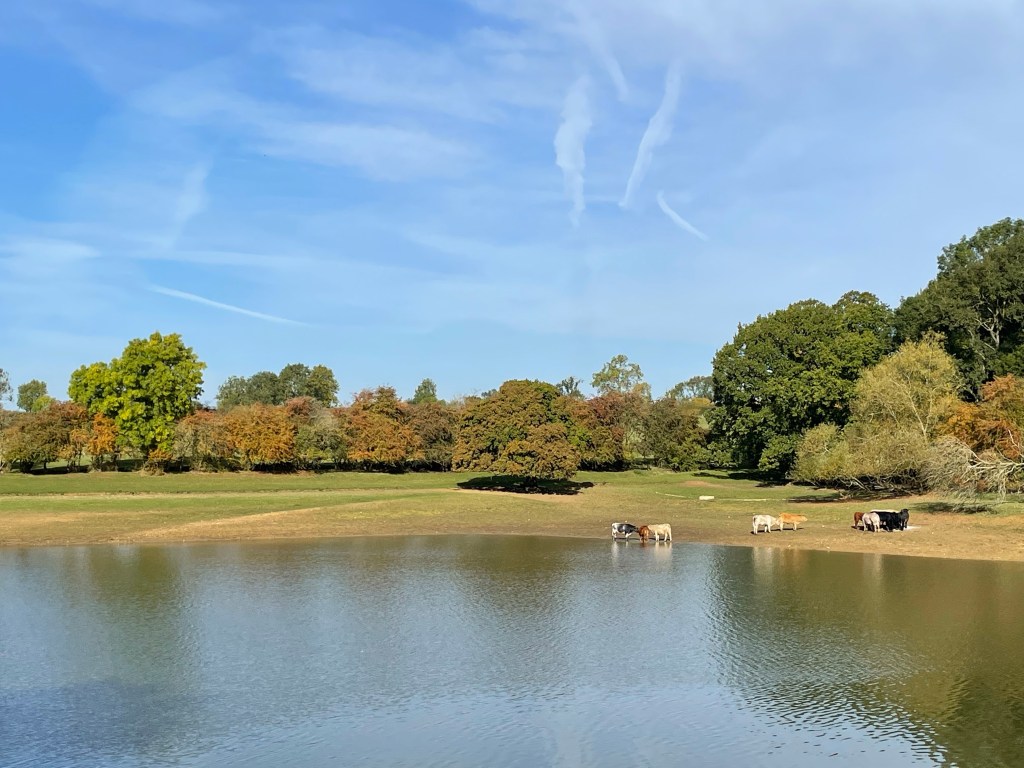
We set off from the church where we ended two months prior, cutting across fields to the Welford reservoir. The path follows the banks before scooting over a sluice to head towards Sibbertoft.

The kilometres flew by as we enjoyed the peace and quiet of the Northamptonshire countryside, listening to the birds and enjoying the autumnal colours.

Cows Drinking from the Reservoir

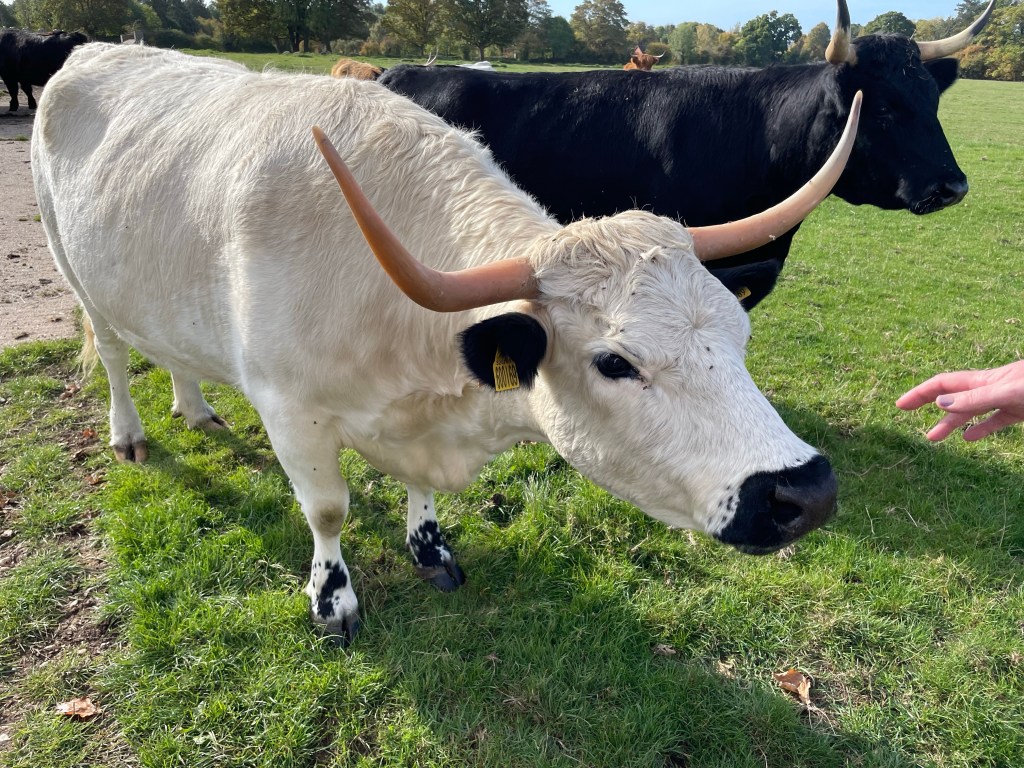
While at Sibbertoft we were greeted by some friendly cattle, that paid a bit of interest in us. Naturally we stopped to say hello and give them a stroke.

From Sibbertoft you keep heading towards Market Harborough until East Farnden where the route heads southeast to Great Oxenden, here we stopped for a quick drink at ‘The George’.

At this point we were over halfway, the distance had flown by. We continued on crossing more rolling fields as the sun gradually lowered casting long autumn shadows.

As we left Braybrooke and approached Stoke Albany, we realised the route had been easy to navigate and none of those blasted nettles that had plagued us on the previous stages, stood in our way. But we spoke too soon. We encountered worse!

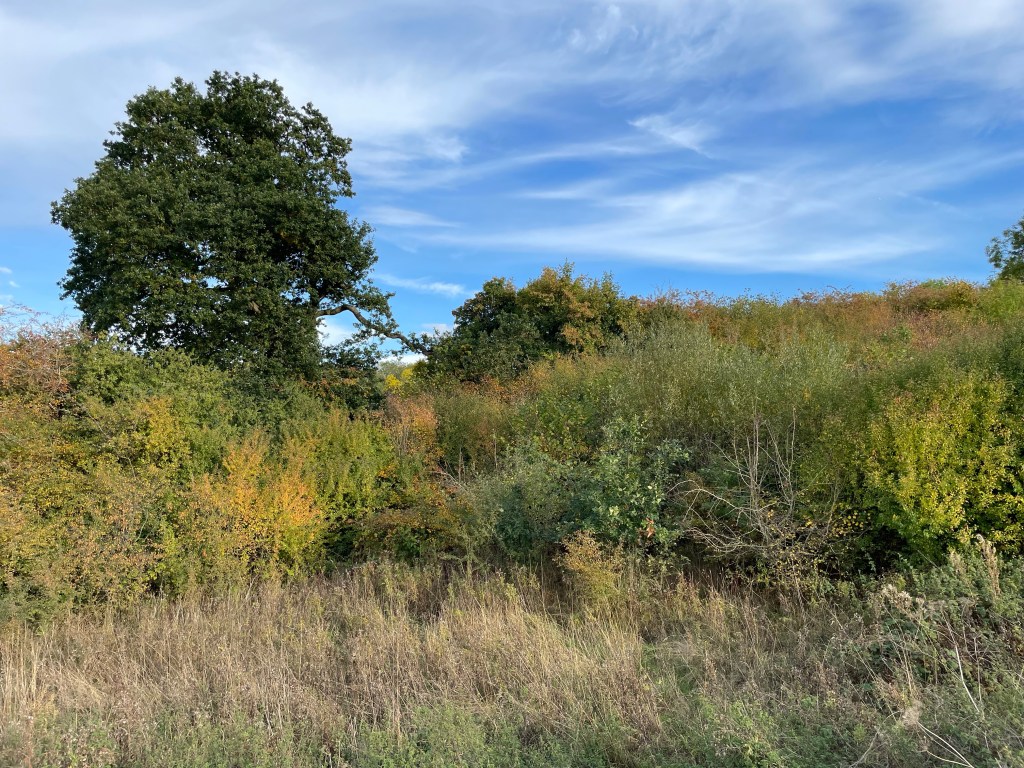
The Route Goes Through That!

We were confronted by a wall of green prickly plants! There was no defined path, and only guided by the ordinance survey app, we entered this triffid monstrosity.

There were brambles, hawthorns, nettles and all manner of shrubbery between us and the next field. Clearly the ‘Jurassic Way’ is not a well trodden route. It is a shame really, as it would make a great first thru hike for those wanting to test the waters of this pursuit.

You get to see the best of the Northamptonshire countryside, no demanding hills like the Cotswold Way and there are plenty of villages, and pubs along the route, to keep you going.

After some ducking and weaving resembling a modern dance recital, we navigated through this prickly obstacle wall.

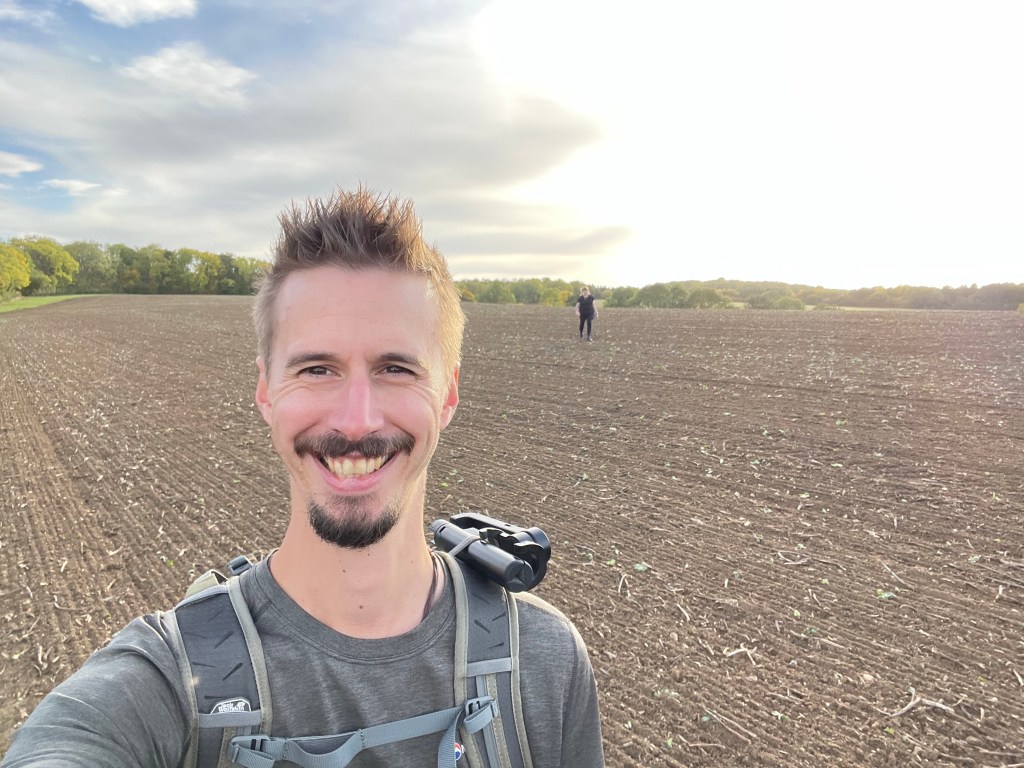
From here it was easy going across freshly planted fields into Stoke Albany then on to the stage end, of Wilbarston.

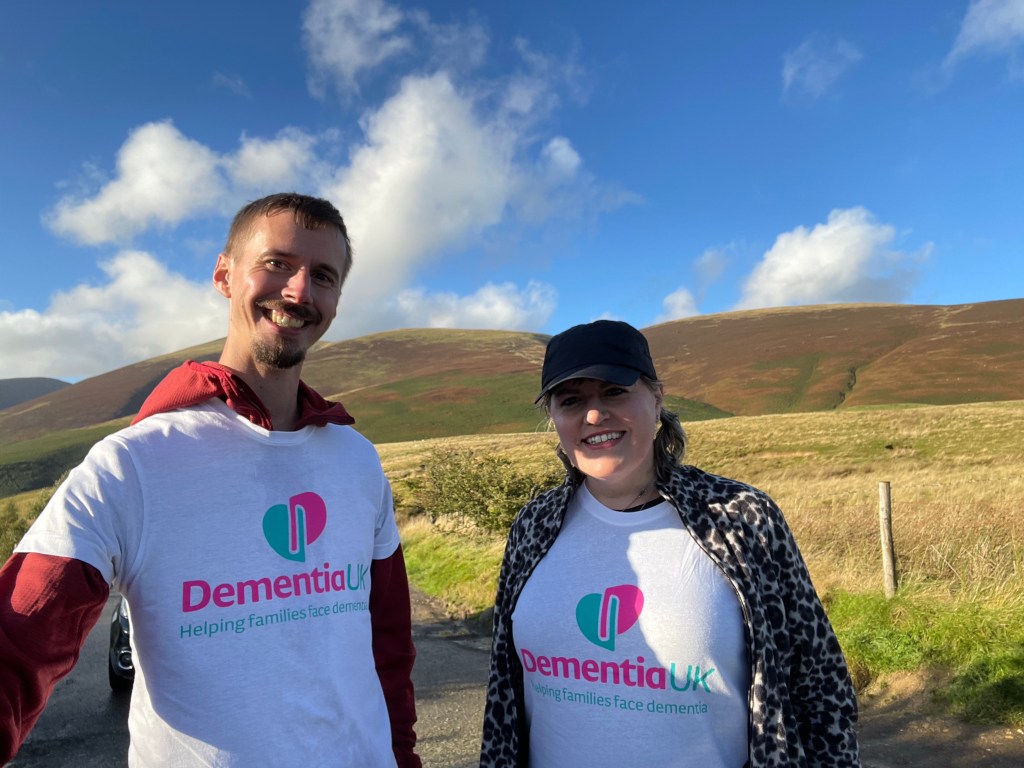
We arrived at the village hall where we had left a car; grabbing a selfie before heading to the local pub (which was closed so we ended up in The White Horse at Stoke Albany) for our, now traditional stage end pint.

As autumn has set in and winter is around the corner, the last two stages will likely be done in the spring. So see you next year as we continue our adventure on the Jurassic Way.

Hannah’s First Mountain

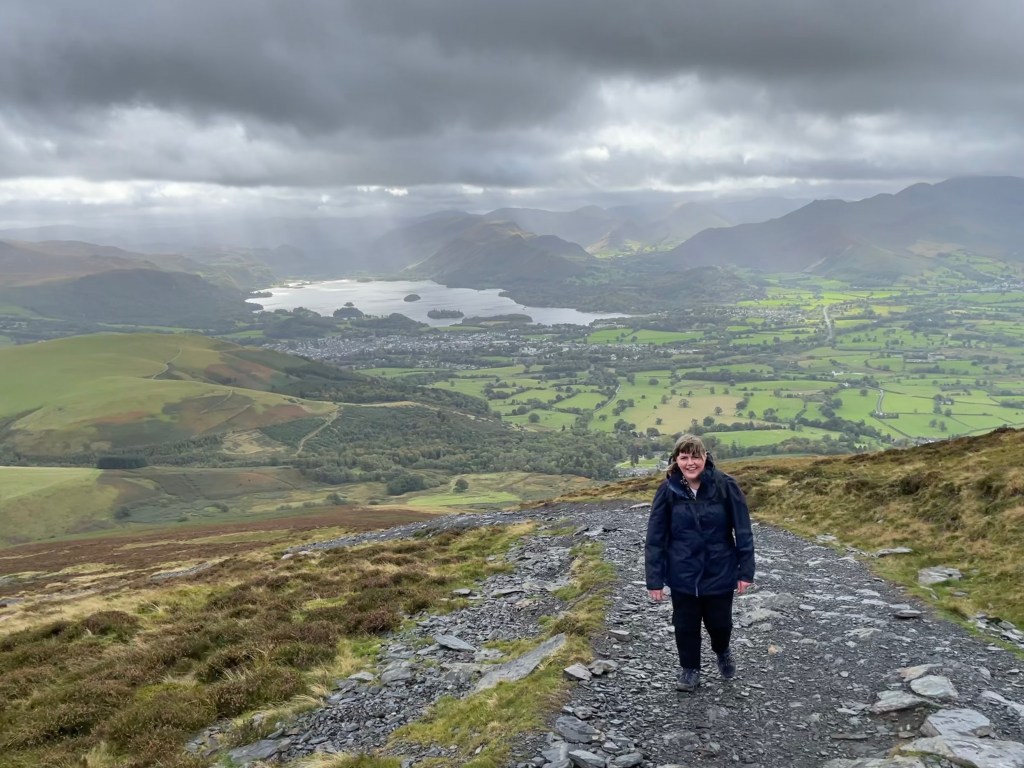
All the training and the long distance walking covering the Jurassic Way for Hannah has led to this point, summit day for Skiddaw.

You may recall from an earlier blog, that Hannah has never climbed a mountain and challenged herself to climb the 4th highest in England for charity; Dementia Uk.
We set off from Northamptonshire about 8.30am, zooming down up the M6 making good timing. By 12.30 our were bags fastened, walking boots tied and we started our ascent.

The weather was cloudy with sunny spells and fairly windy, not too bad considering the forecast was rain today.

Our good timings continued as we made our way up the dreaded steep zigzag section that puts you on the run up to ‘Little Man’. We encountered a few brief rain showers, nothing to dampen our spirits.

The path gradually gets steeper as you summit ‘Little Man’ nothing we couldn’t handle, however as soon as we got to the top, we were hit with gale force winds, winds we were protected against as the path runs the North East side of the mountain.

We and fellow walkers had to sit low to the ground and hold on to the rocks to stop us being blown over.

The path dips down along a ridge and up again to Skiddaw. The wind was blowing with such force the clouds we speeding by like race cars. It was too dangerous to take this path, and the other walkers had the same idea.

There is another route that follows a path on the North East side of Skiddaw giving protection from the wind, not ready to give up, we back tracked to this path and attempted the summit. But nether the less, Hannah had summited her first mountain, ‘Little Man’!

Bracing the Wind

The plan seemed to be working, soon we were ascending Skiddaw. The top was in cloud cover but didn’t look daunting. We reached the cairn that marks shallow rise to the true summit.

Bang, the winds hit us again, the true summit a mere 100m away, but the weather worsened. It started to sleet! This, coupled with the gale force winds that had us clinging to the mountain top, forced us to turn back.

For the sake of getting an extra 3m higher to the stone marker wasn’t worth taking flying lessons. If you doubt us, see the below video!

We begrudgingly began our descent in the driving rain. There were a couple of walkers heading up that we warned of the conditions, but they wanted to see for themselves.

Once we got to the bottom of the dreaded zigzag section the clouds cleared and the sun came out. We couldn’t believe it! However looking back up you could still see the clouds speeding over the summit. It may be pleasant now but the winds certainly hadn’t stopped.

Once we dried off a celebratory drink or two was in order. So a pub crawl around Keswick ensued. We also found out after speaking to some friends, that the mountain rescue team, find Skiddaw the worst for people and dogs being blown off from the winds!

So congratulations to Hannah for conquering Skiddaw in some of the most horrendous conditions. The current total for Dementia UK is £840!

Camino Portugués Brucy Bonus

I have finally found some time since returning from my second Camino to make my customary video of the trip. It has been a bit hectic for me since arriving home; my feet were only on British soil for a week, before I was boarding a plane to Amsterdam for a training in course; I had only enough spare time to do my washing! The montage is below, and I hope you enjoy!

Out and About in Porto

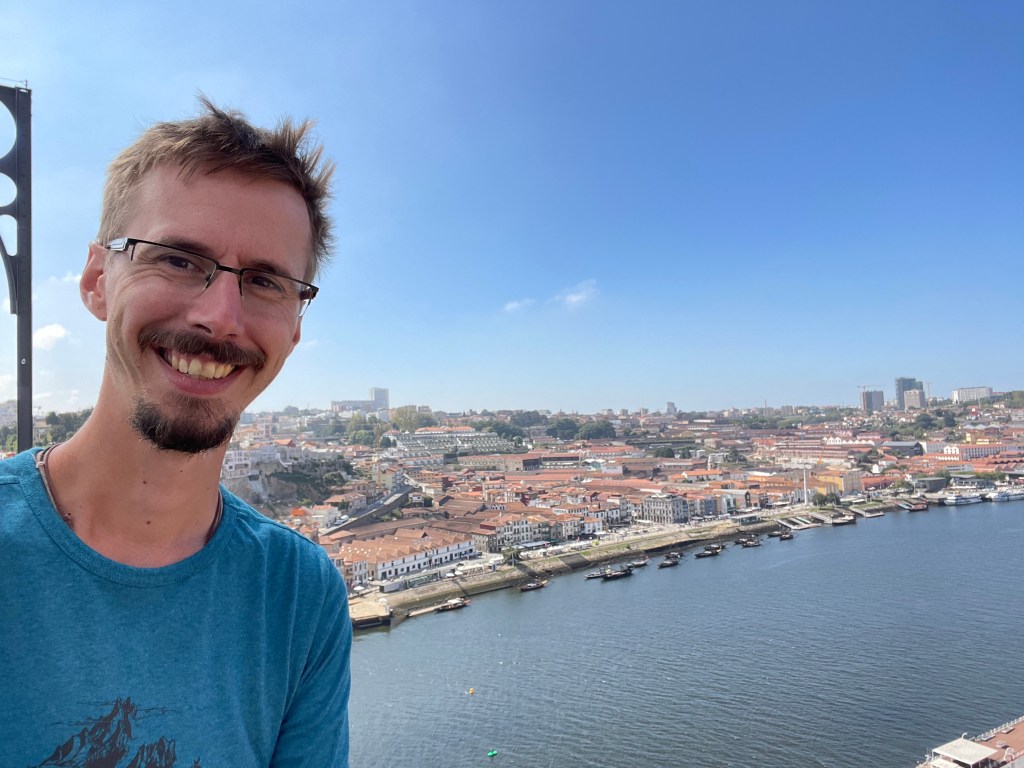
Overlooking the Port Cellars

First thing I did once checked into Porto was do a bit of clothes shopping. If I’m spending a few days in civilisation, I don’t want to look and smell like a pilgrim! It was a late one Tuesday as Hailey flew out Wednesday afternoon, thus we celebrated her last night of her Camino adventure.

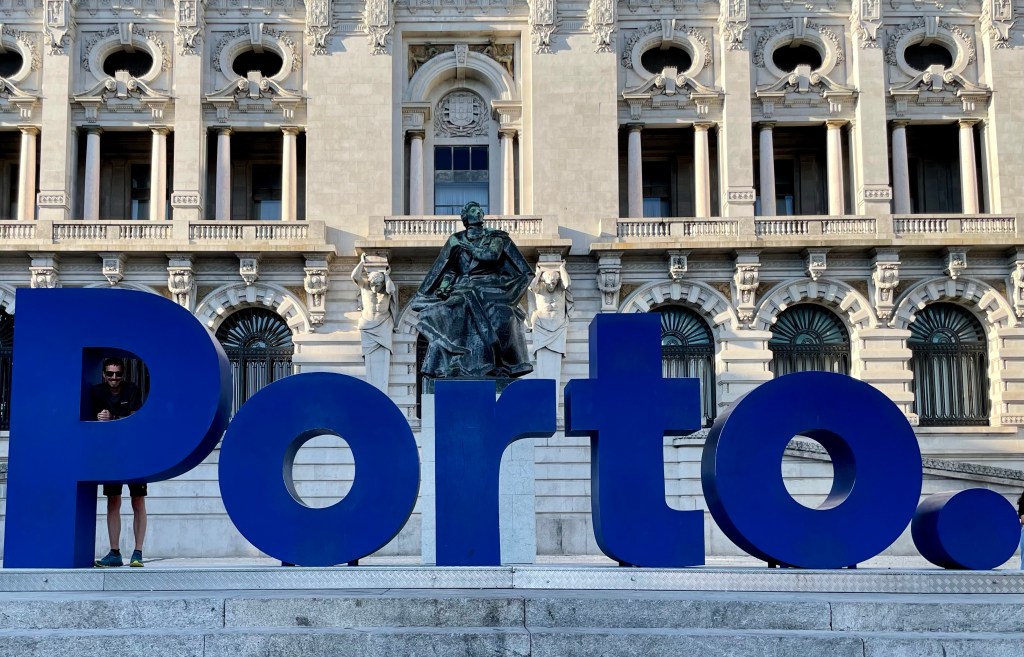
Wednesday morning we went on a walking tour around Porto. We visited the main points of interest and admired the architecture. Most of the buildings had been designed by José Marques da Silva in the late 19th and early 20th century.

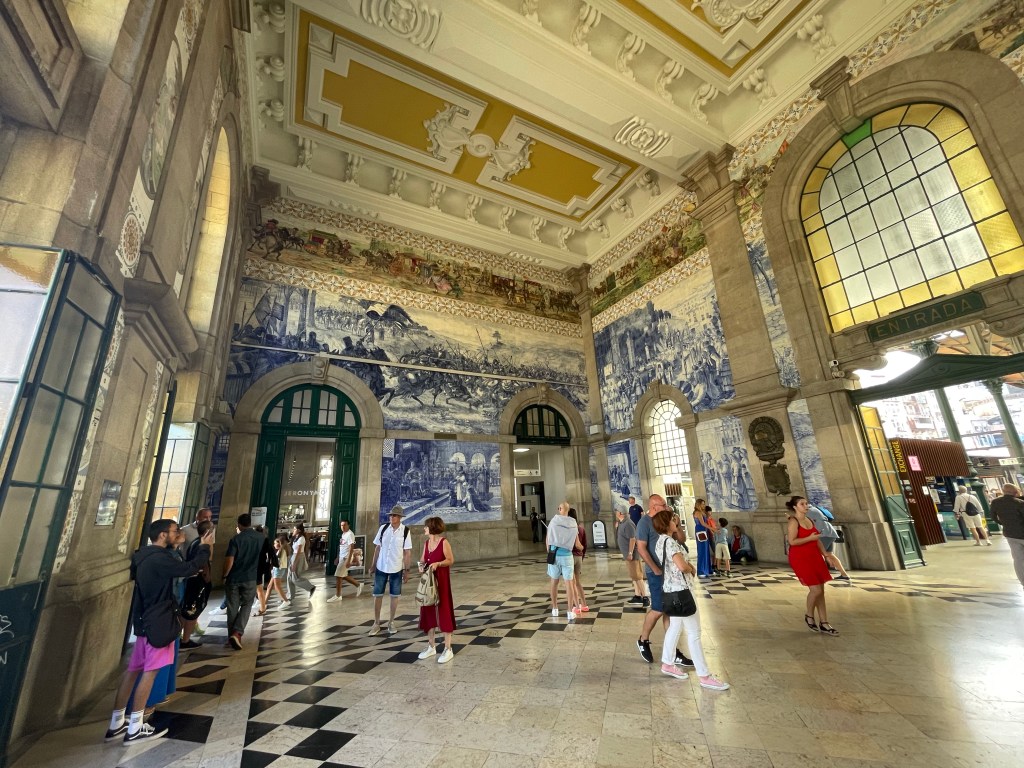
Two prominent buildings are the theatre and the São Bento railway station. The Funny story about them is that he forgot to factor in toilets or ticket booths!

One aspect around Porto are the blue and white mosaic tiles that adorn the buildings. In fact there are 20,000 tiles that make up the interior of the train station.

Mosaics detail the history of Portugal

The blue colouring is made from cobalt, which at the time was an expensive metal, so it was a sign of wealth; hence they are on the government and religious buildings.

The tour went past the cathedral where I had a bit of nostalgia, as two weeks ago I was there collecting my credential and setting off on the Camino Portugués.

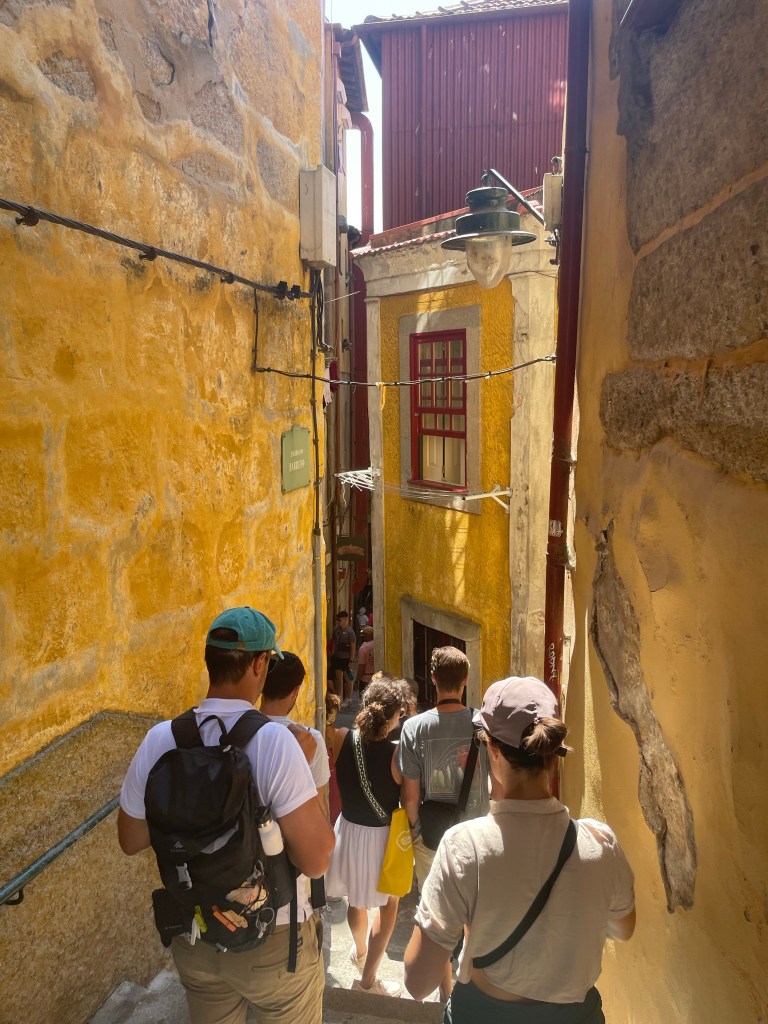
We descended the medieval part of the city to the waterfront, calling into a bakery for chocolate cake. This was when Hailey had to leave for the airport, we hugged goodbye. It reminded me of the last day in Santiago at the end my Camino Frances; it felt like I am saying goodbye a friend I’ve known for years, not just for two weeks.

Medieval Streets

Thursday morning I visited the Bishop’s palace next to the cathedral. Porto and the region used to belong to the Catholic Church until the Portuguese civil war ousted them. So the person in power was the bishop, who thought himself as a king, thus had the palace built.

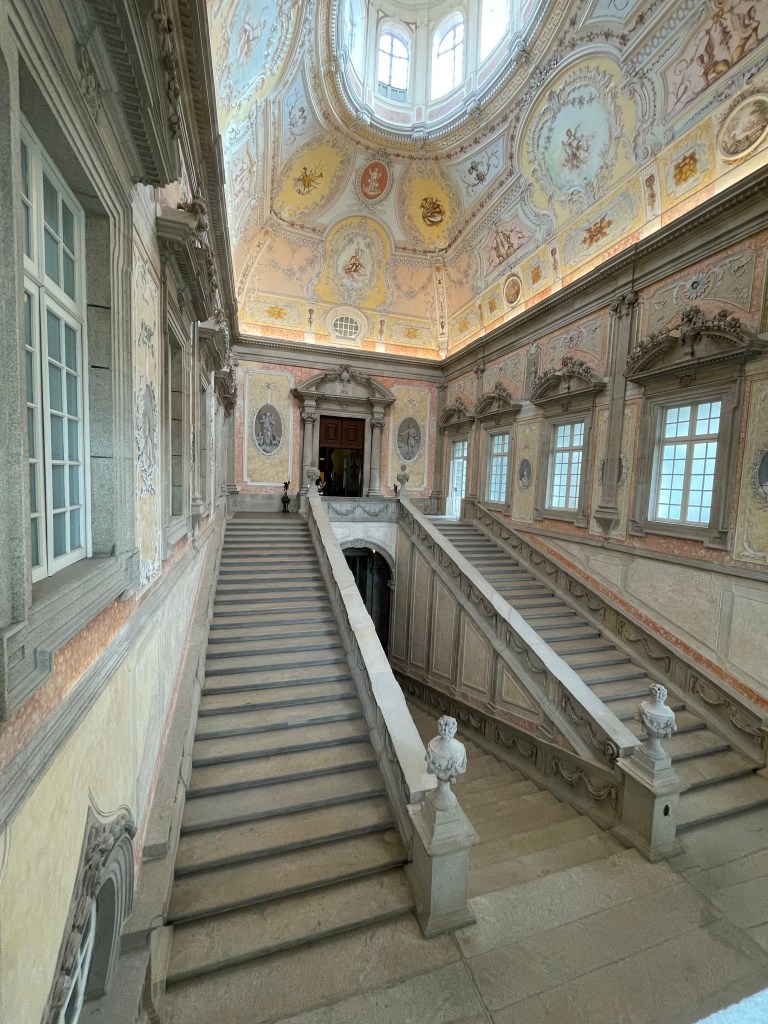
The building is dominated by the granite staircase in the centre of the building which is grandly decorated with a dome ceiling. There are many rooms for functions and greeting guests as well as a throne room!

Staircase in the Bishop’s Palace

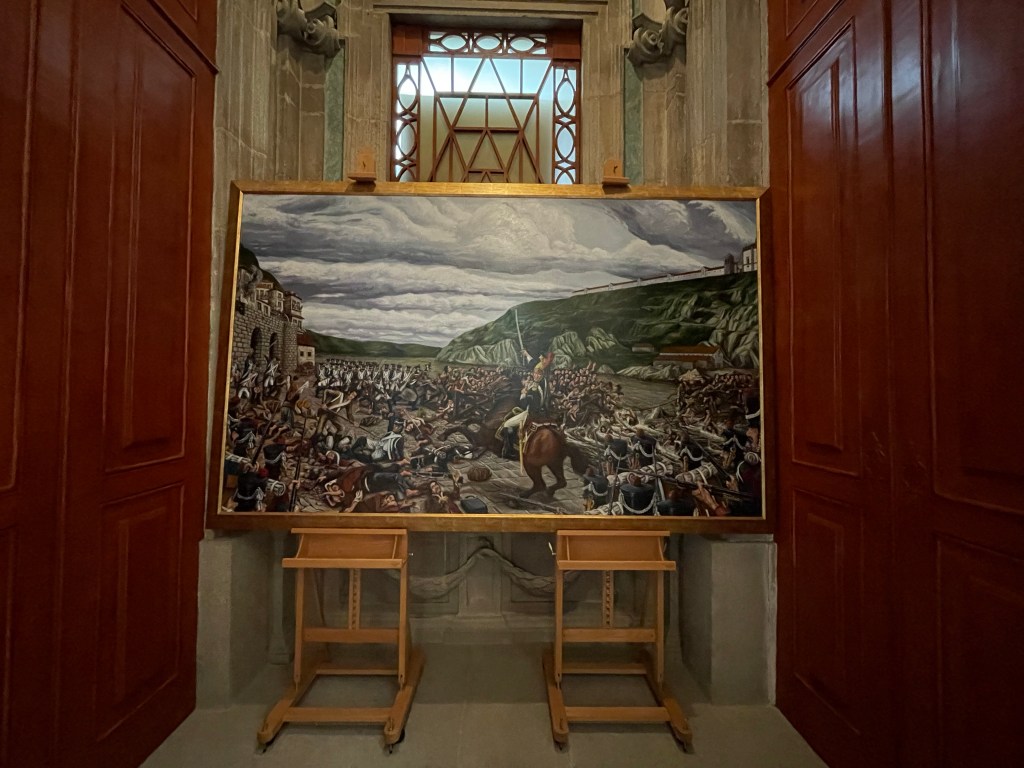
A huge painting depicting the Napoleonic invasion of Porto and the populace fleeing the city by crossing the Rio Douro to Gaia that at the time only had one bridge consisting wooden planks on boats!

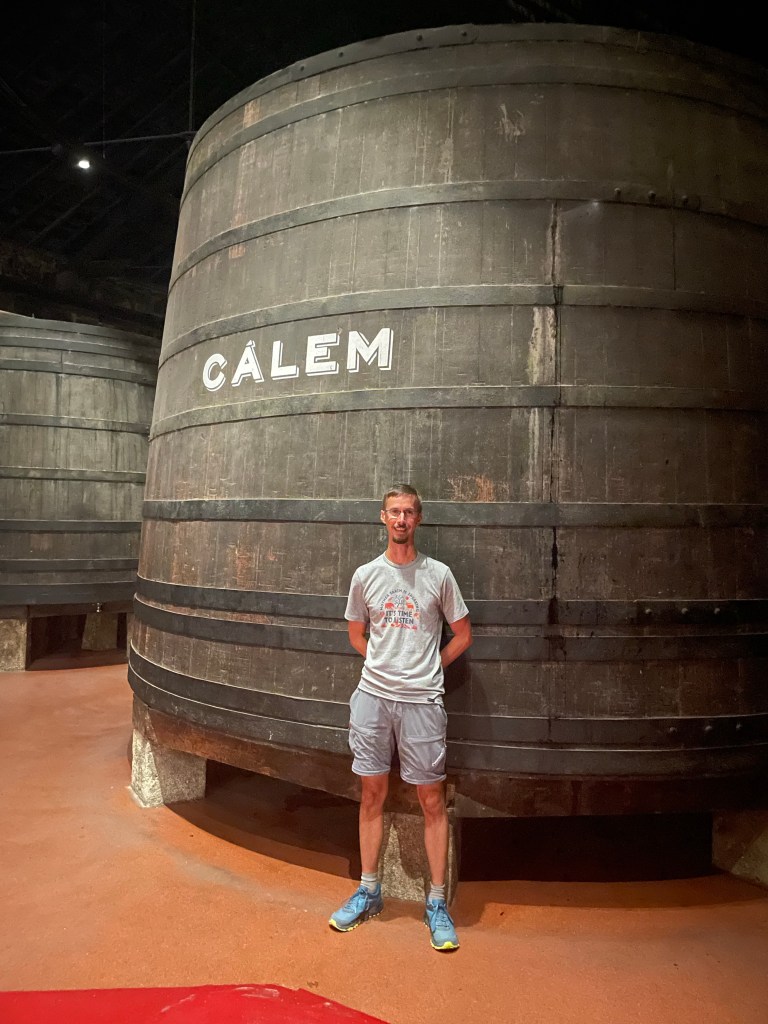
In the afternoon I went on a Port tasting tour. It is actually made on Gaia over the bridge from Porto. The tour went to three producers, starting with the bigger company Cãlem then to two micro companies.

There 4 types of Port, white, tawny, ruby and rose; my favourite was the rose. I left the tour with the buzz of 7 Ports to meet up with Alfredo for the last night of this adventure.

It was a quiet one due to going on a pub crawl the night before and the early flight in the morning.

Full Circle

I still have a week left of my leave and most of my Camino friends have either left or due to leave today. I had the option to go to Fisterra or fly back.

However checking the flights they were either too expensive or too early for me to get the bus back from Fisterra, should I continue walking.

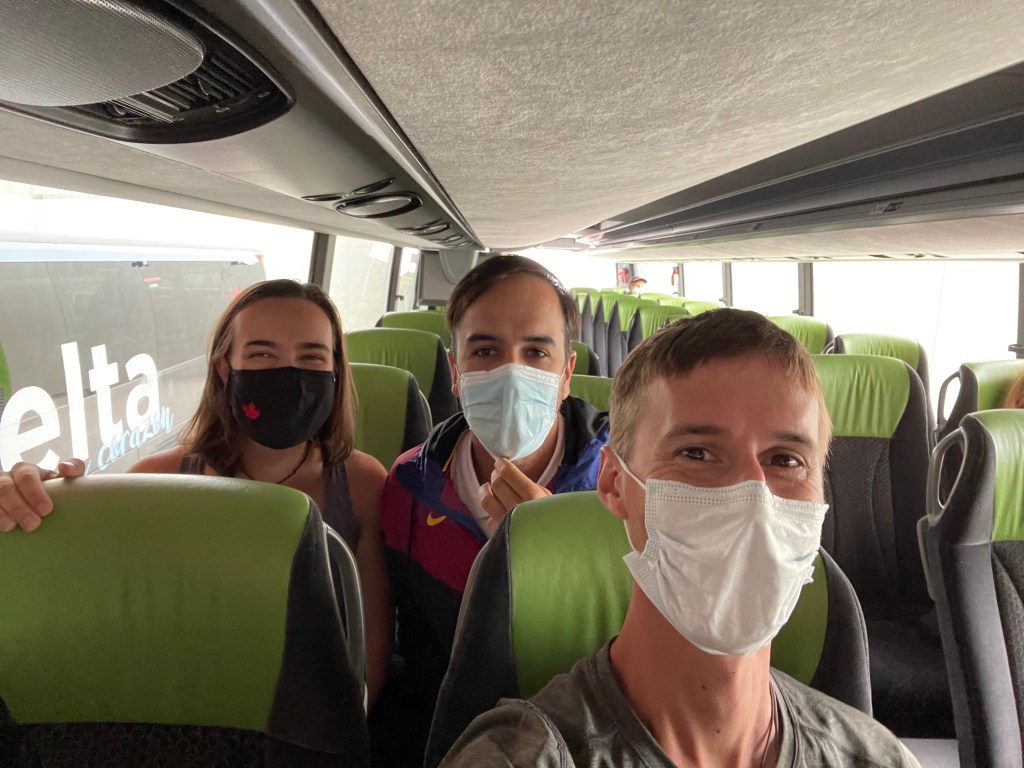
I went for option ‘C’. I hopped on the bus with Alfredo and Hailey to Porto!

I plan to stay here until Friday, when my flight will take me back home. I’ll spend the next couple of days exploring the city since I didn’t get chance two weeks ago.

Relaxing in Santiago

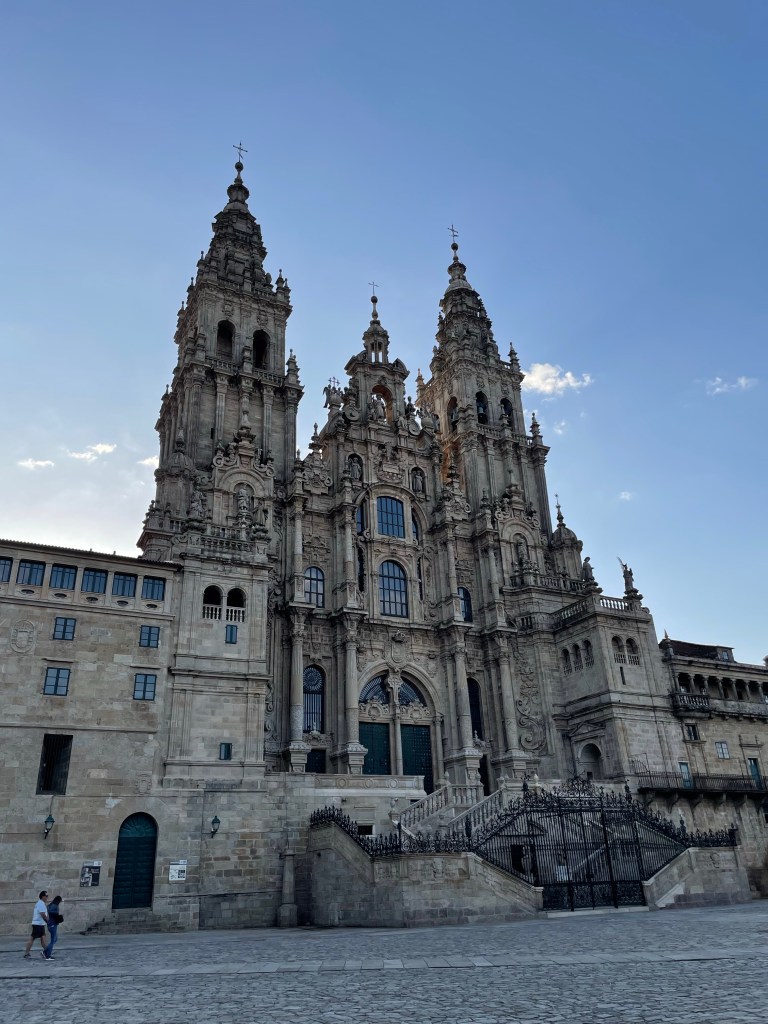
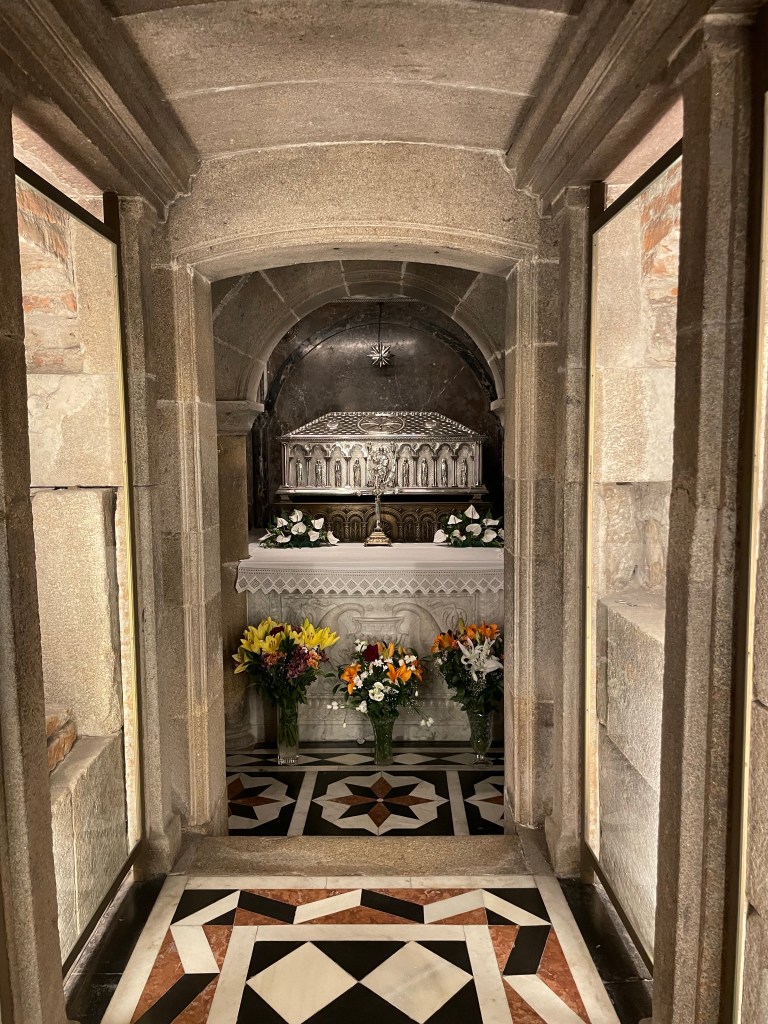
I rolled out of bed around 8, enjoying the extra sleep. I went for some breakfast then had a walk around while it was quiet. I went to visit Santiago’s tomb and the cathedral.

For lunch I met up with my Camino friends and said goodbye to Jelonda, as she would be heading home. In the evening I went on a walking tour around the city.

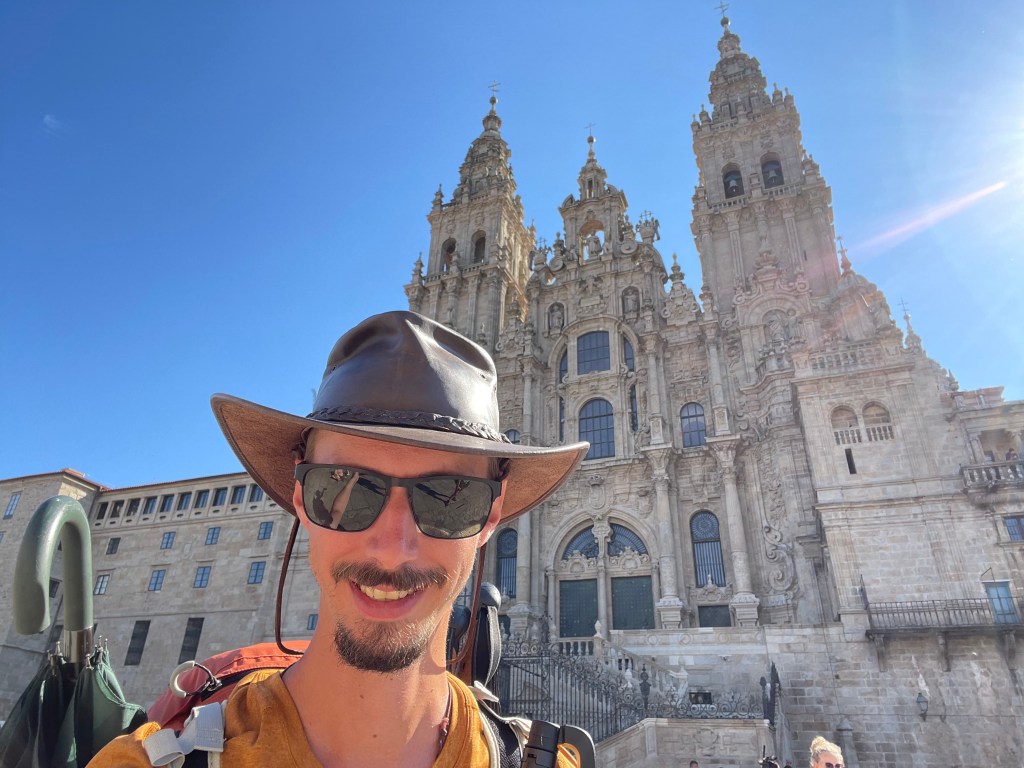
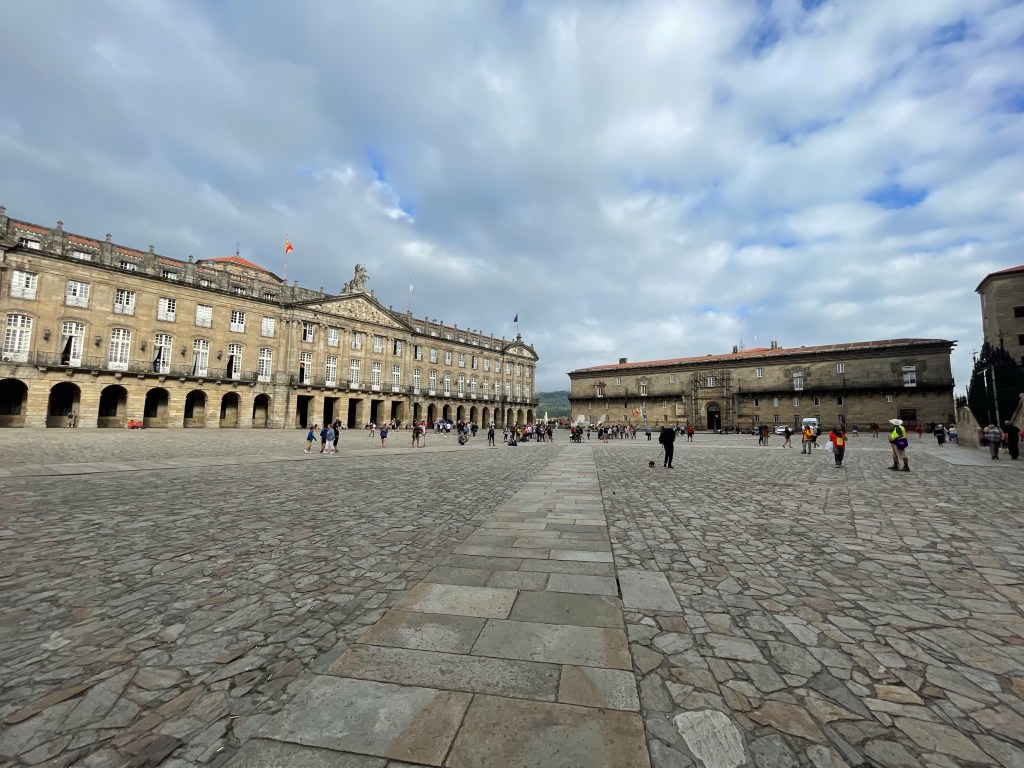
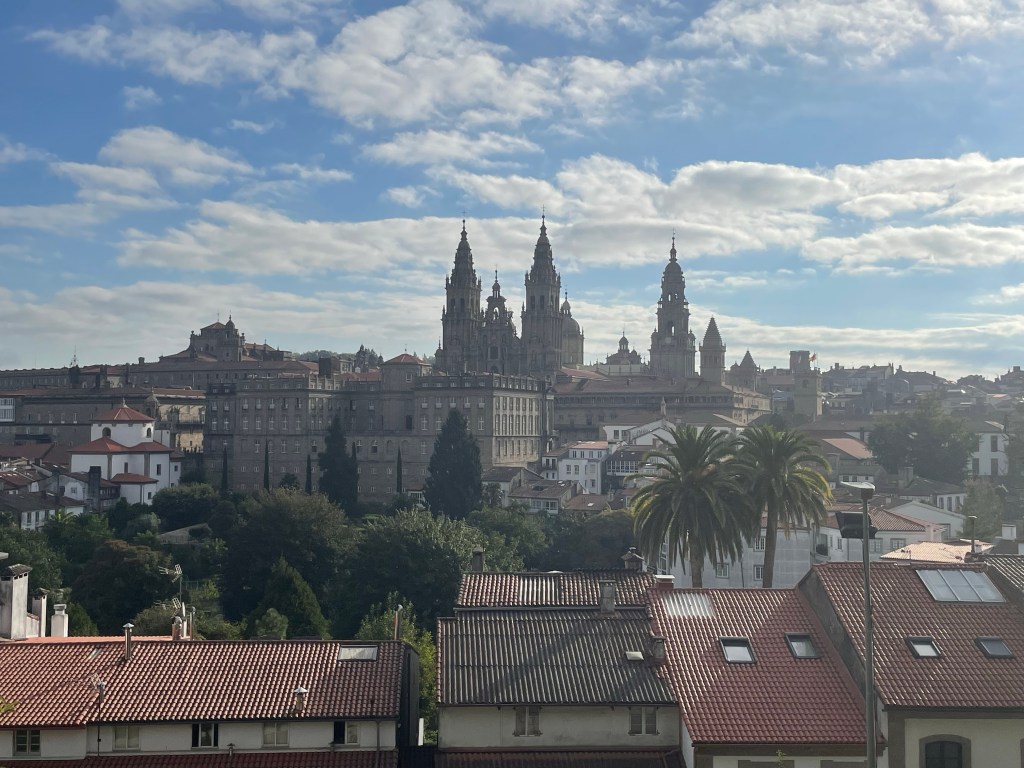
It started in the main square outside the cathedral. The original cathedral didn’t look as grand as it does today. It was once in a Roman style, and looked very simplistic. However as the Camino grew in popularity, during the 18th century, the church built the facade that we see today.

To the left is the Paradore hotel where it will cost you a small fortune to spend a night. It was once the location where all the pilgrims stayed, but before that it was owned by the king.

The main power in Santiago belonged to the bishop, but the king made the building under his authority, and became an estate within the city, that had different laws. Somethings were legal in the building but not outside.

The building opposite the cathedral are governmental offices, including the police stations.

Gov. Building left, Paradore right

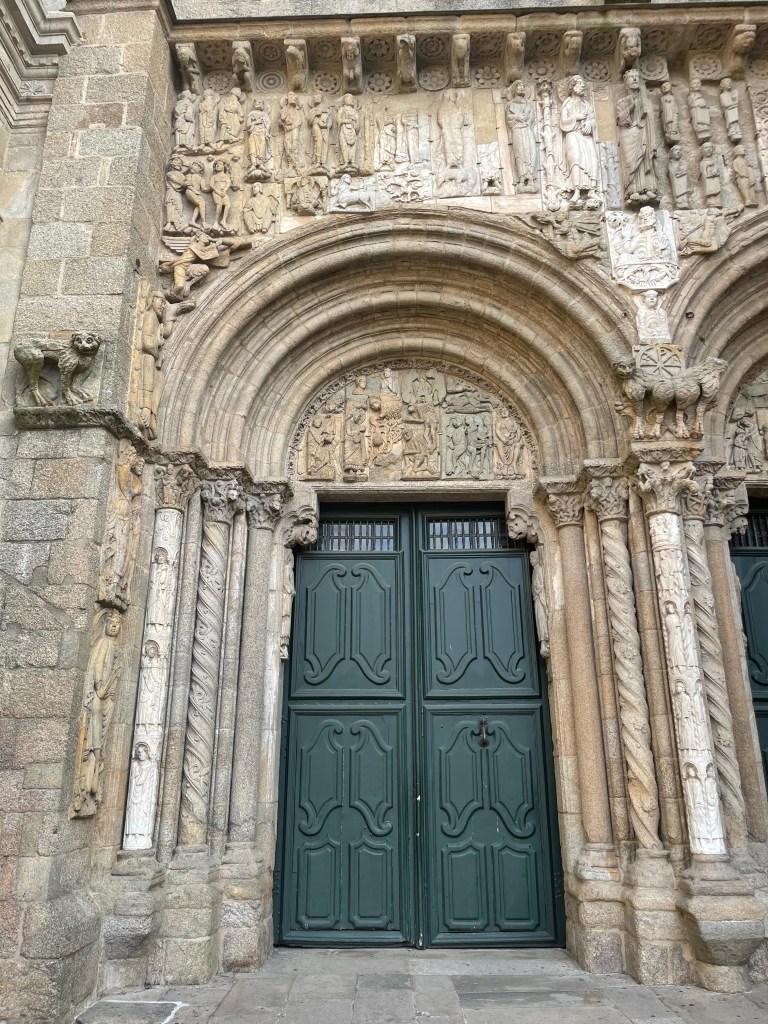
On the other side of the cathedral is the main entrance, where above the pillars on either side of the doors are strange, evil looking creatures. Which seem out of place for a cathedral.

They are meant to be lions! At the time these were carved, the stonemasons actually had never seen a lion in their life, so they did their best with descriptions and their imaginations.

There is a park that over looks the cathedral, boasting some of the best views in the city. Here there are two statues of ladies in colourful clothing.

They were fashion designers at the time of the Spanish civil war. Many of those who opposed the tyrannical government fled Santiago and hid in the surrounding countyside. These two ladies did not, and they were suspected to be protecting those who were in hiding.

They were raped, beaten and tortured almost on a daily basis, but they still walked the streets in defiance. They became symbols of the city’s stoicism.

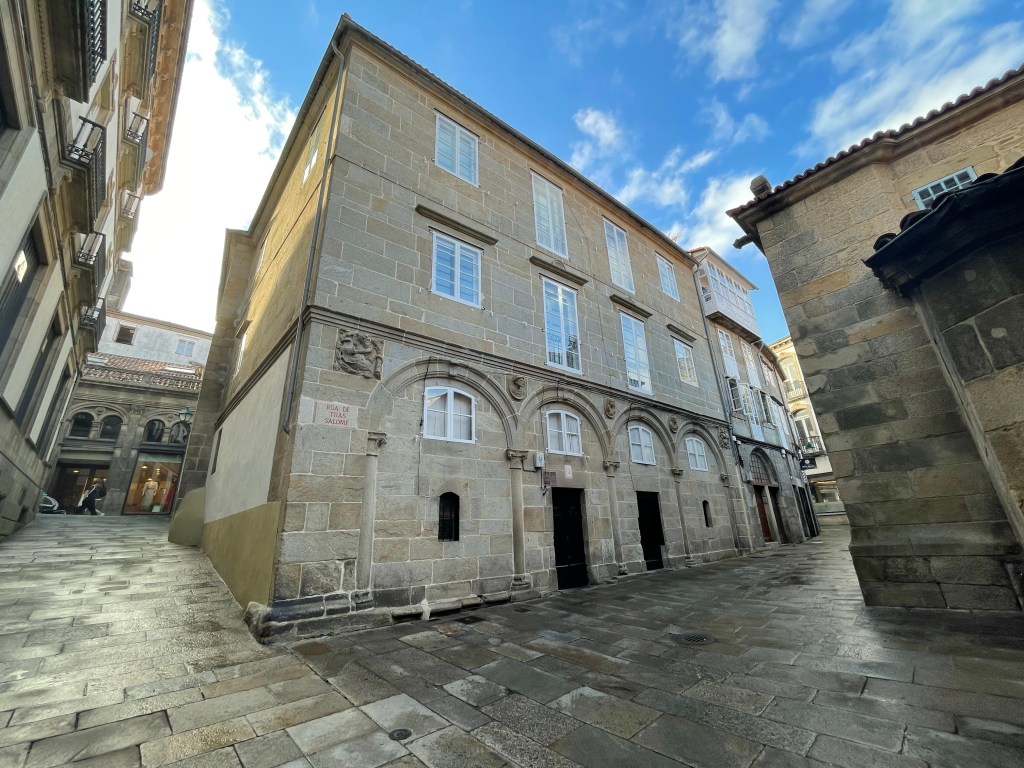
Back into the city we were shown a building that was housing for the wealthy elite of the city. Below this in the cellar, they used to keep horses and cattle, to protect them from Galician winters.

The cellar was also where you would go to the toilet! Since then proper plumbing has been installed and they are now bars.

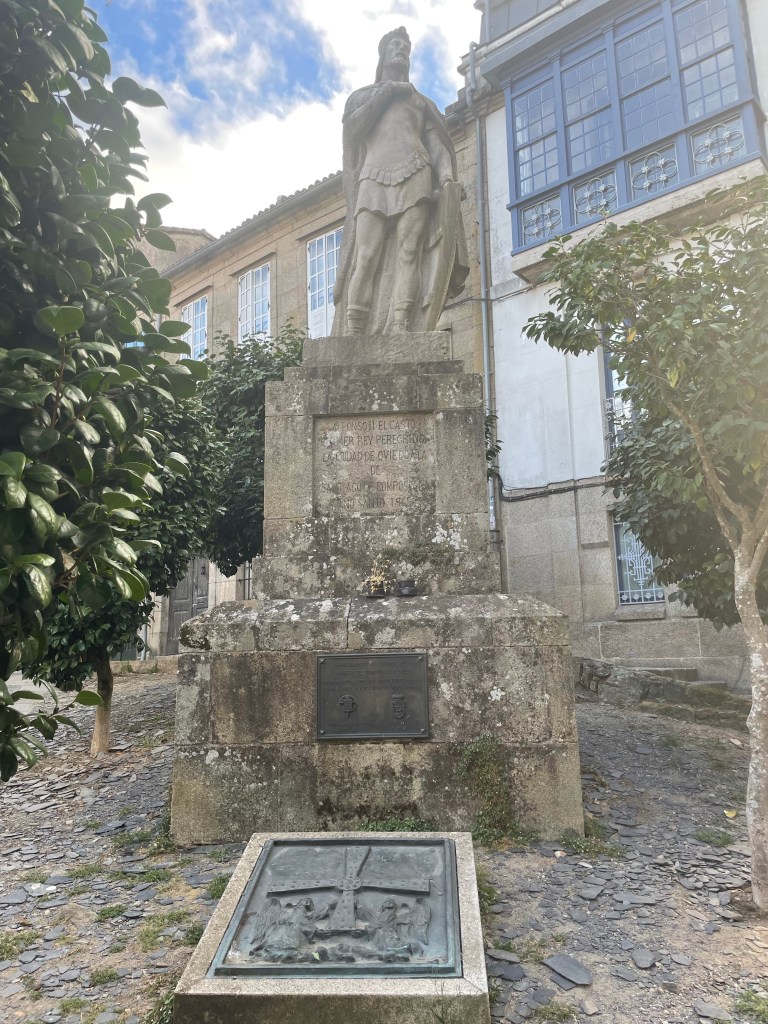
We were also shown a statue of the first ever pilgrim, King Alfonso II. When he was notified of the finding of St. James remains. He left his palace to see and verify the finding. So he is accredited as the first pilgrim, and the route he took was the Camino Primitivo.

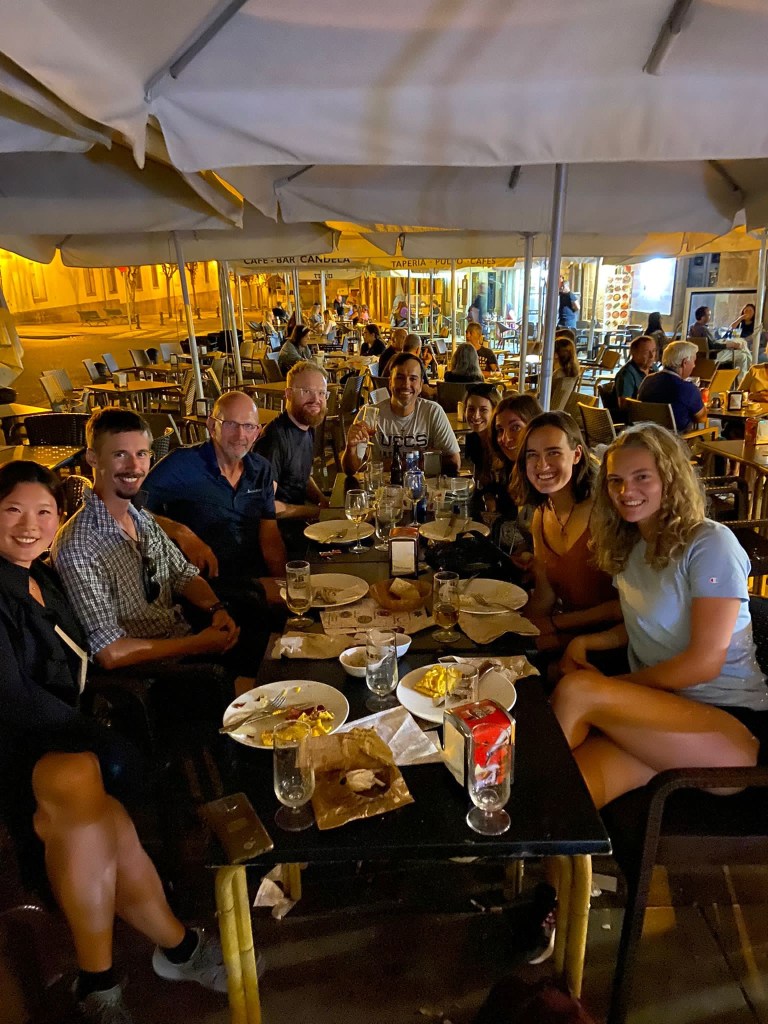
Once the tour was over we all went for drinks and tortilla y potata. I said goodbye to Christin, as she has an early morning flight back home. Still being on Camino time, by 10pm we were falling asleep, so we called it a night.

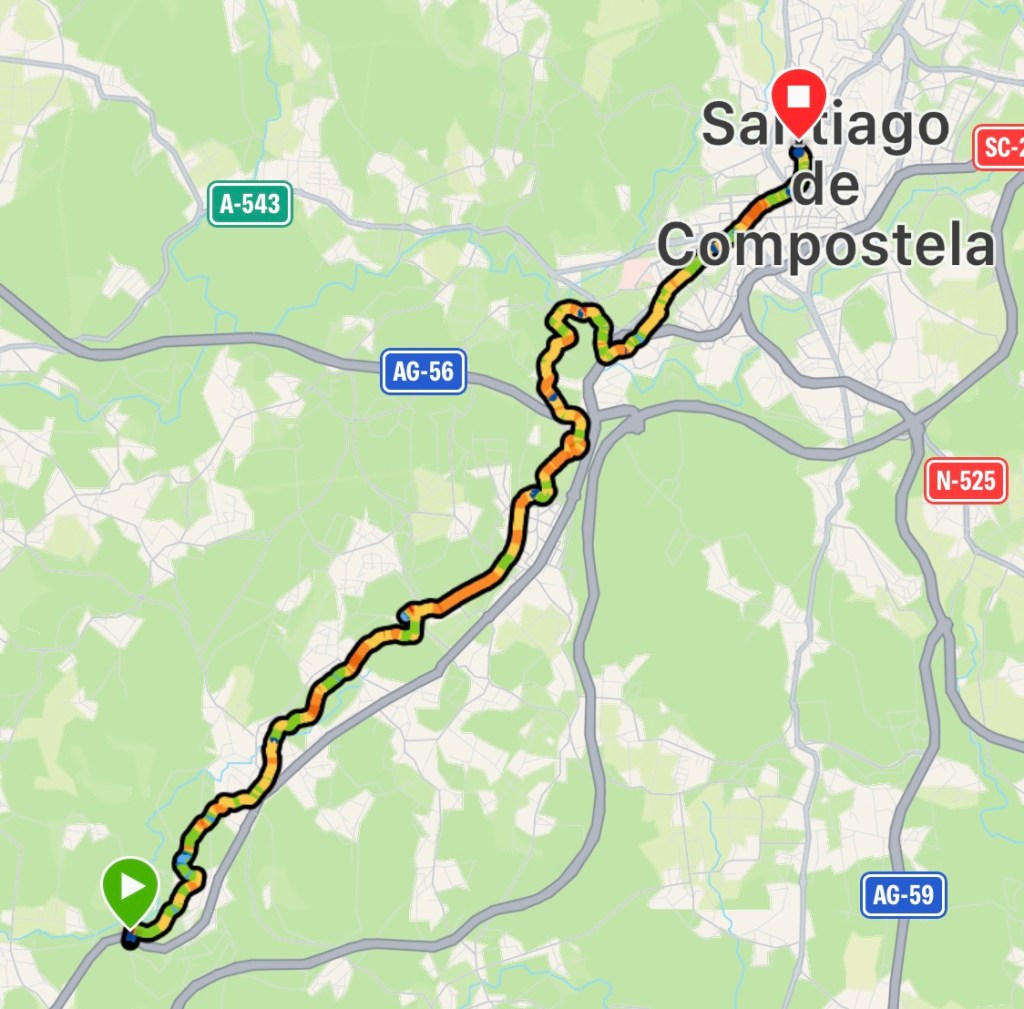
Camino Portugués – Central Day 12 – Faramello to Santiago de Compostela

It was a good night sleep as we left the windows open to allow air movement, keeping the room nice and cool; also the sangre we had last night helped, as we celebrated our last night before Santiago.

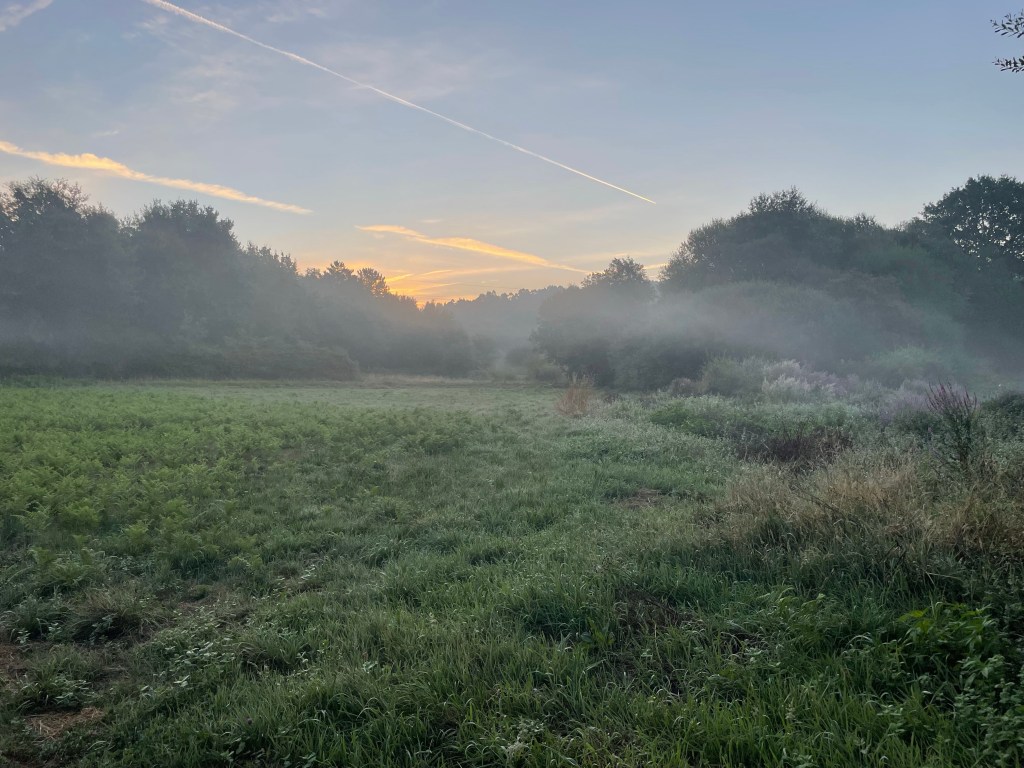
We left at dawn walking in the cool misty air. As it is Sunday, most of the cafe’s were closed, so it was about an hour into the walk before we had breakfast.

The route was undulating as we approached the city and we mostly walked in silence contemplating our journey to this point. At about 5km to go, we got our first glimpse of the cathedral. We’re getting close now!

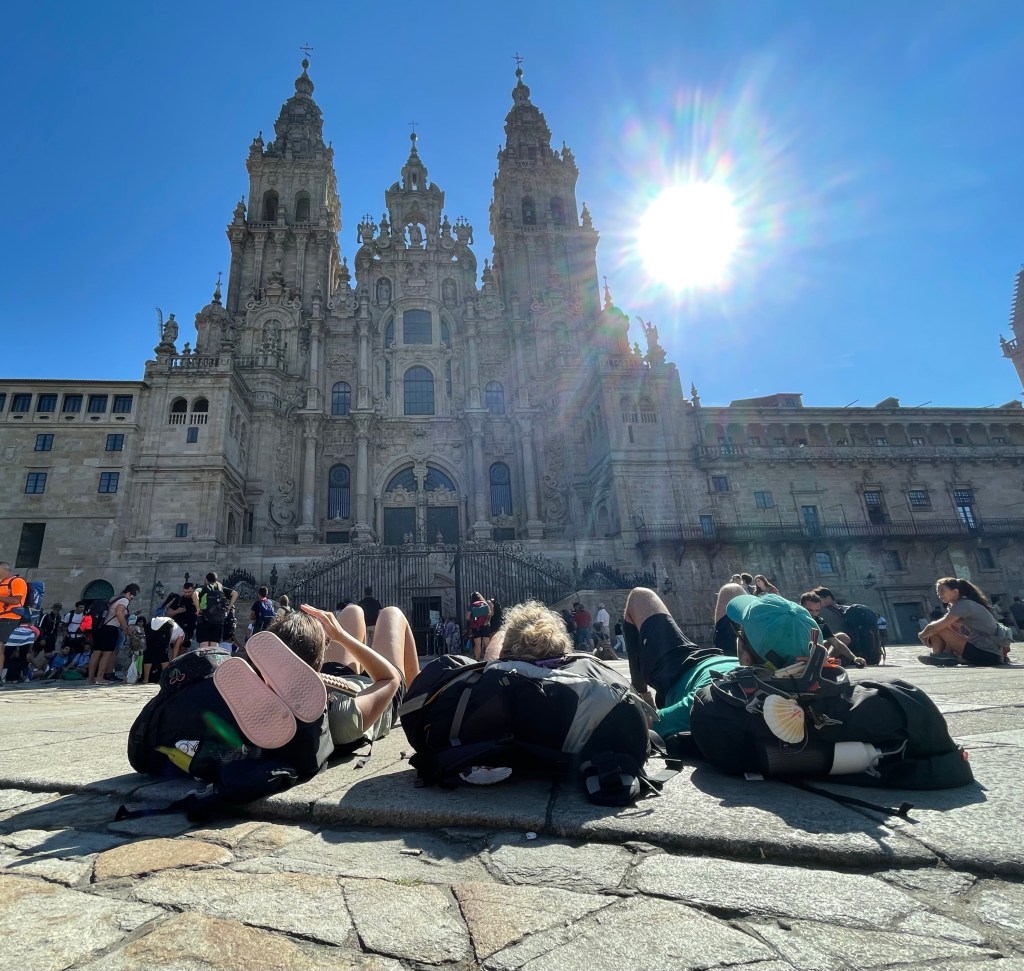
We walked through the urban outskirts then through the old town to arrive at the square outside the cathedral at 11.30am. It was a joyous moment, we all hugged and congratulated each other for completing the Camino Portugués.

We all laid down using our packs for pillows and stared at the cathedral in awe. Then to my surprise Erdal showed up! We walked together out of Vitorino, but he had to turn back to Ponte Lima due to his bad knee.

I gave him a congratulatory hug as well. He has a flight back to Germany tonight, so unfortunately he won’t be joining us all for a meal later.

We then went to get our compostelas, in the queue in front of us, was no other than Kim! After getting our certificates we all went for food and beers, where Daniel joined us as well (he arrived yesterday).

I checked into my accommodation then had a wonder around the city. I bumped into Christina who I met briefly on the Espiritual route who had been walking from Lisbon!

I also met Francina from Germany who I met in Labruja. But the Camino magic hadn’t finished yet, Jelonda then arrived! She too took the Espiritual route! All my Camino friends are now in Santiago!

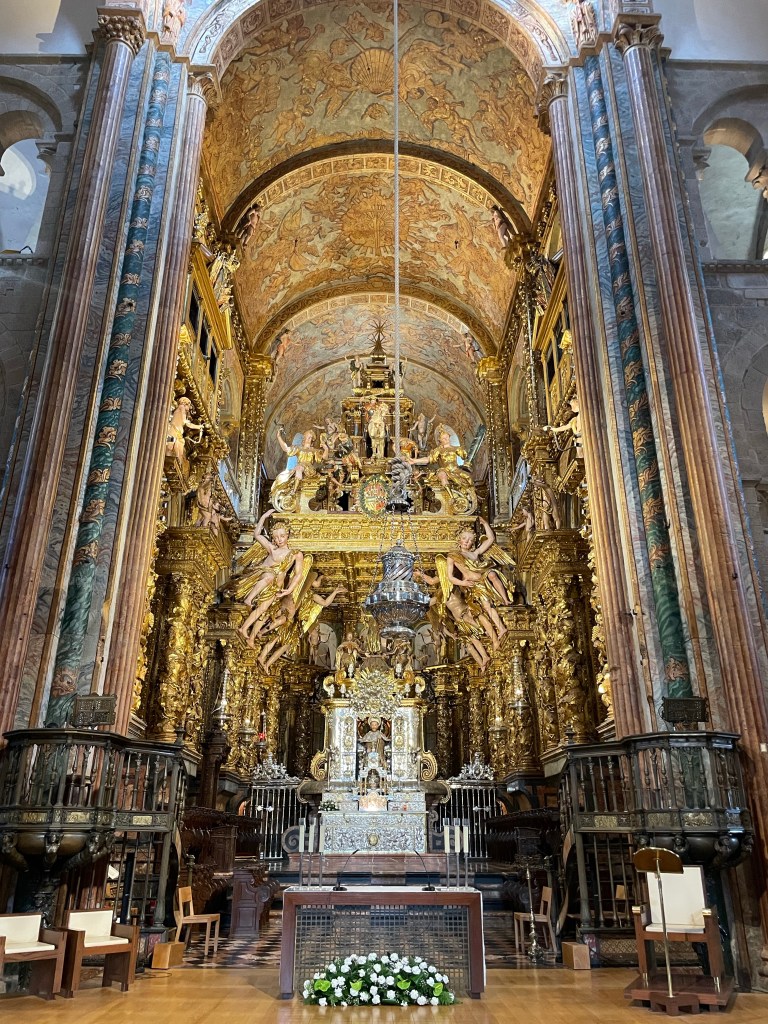
At 7.30 I went to the pilgrim’s mass at the cathedral, but I wasn’t lucky this time to see the botofumerio swing.

Everyone I had been walking with since joining the central route, met up for drinks and food to celebrate our achievement. Over the next few days everyone will be leaving for home, which leaves me with the quandary with what to do next.

Camino Portugués – Central Day 11 – Vilanova to O Faramello

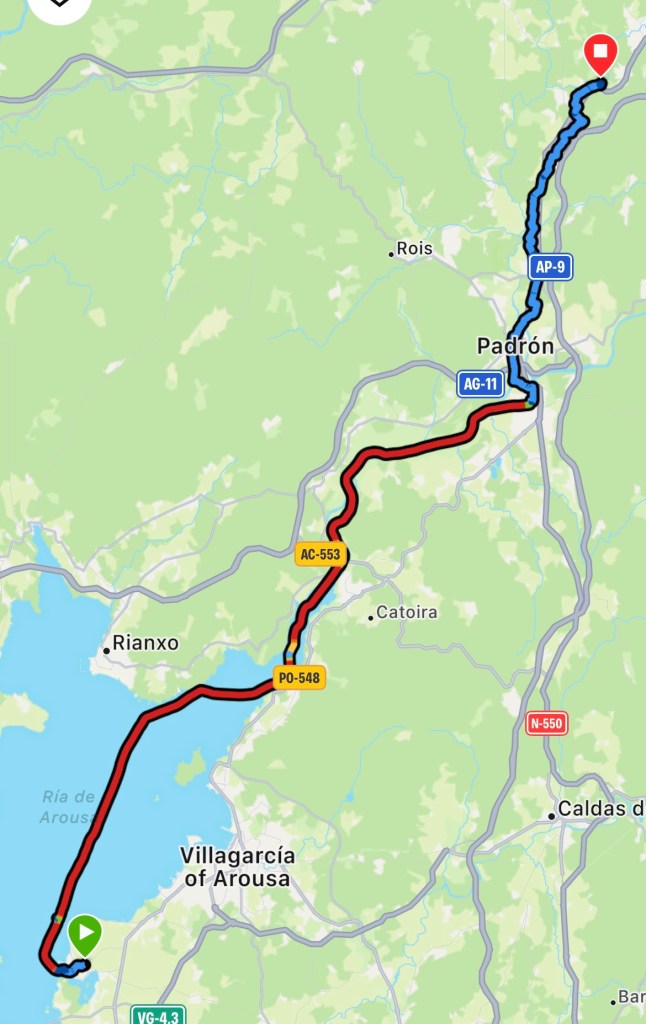
After breakfast in Vilanova, I made my way to the harbour to watch the fishing boats come and go while I waited for the boat to Padrón.

9.15am I was cruising up the estuary and the Rio Ulla. The boat stopped to watch a fishing boat in action, pulling the catch from the shellfish farms that dotted the waters.

Soon we reached the stone crosses that show the route into Padrón. There are three next to each other, with the central one taller than the others.

The boat pilot, said the middle one represents Santiago and the other two are for the sailers that brought his remains here. We also passed one of 5 forts that once guarded the estuary and for some reason there were Viking boats moored there?!

I don’t know why, as my pigeon Spanish couldn’t pull out enough words to understand what the pilot was saying.

We arrived into Padrón just before 11am where I headed to the town centre. Outside Iglesia de Santiago (St. James’ Church), to my surprise, Alfredo, Hailey and Christin were having brunch. My friends I had left behind in Arcade! Camino Magic!

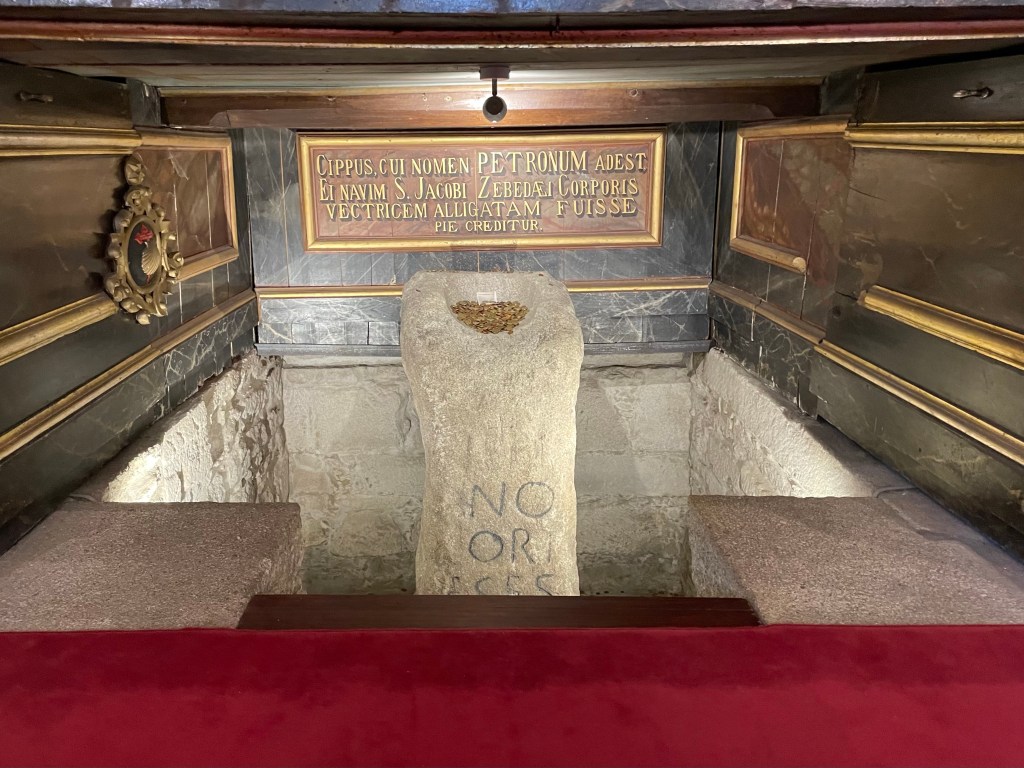
I stopped for food before popping into the church to see the mooring post that Santiago’s boat is supposed to have been tied to, before walking on with my friends.

It was a mostly road walking again but it did pass through quiet little hamlets, no main roads. We called into the village of ‘A Picaraña’ for lunch before making the last 2km to ‘O Faramello’.

They are stopping here tonight; with luck, the albergue there still had room, so I booked in with them; there is also a washing machine! So fresh clothes for the last 14km into Santiago tomorrow!