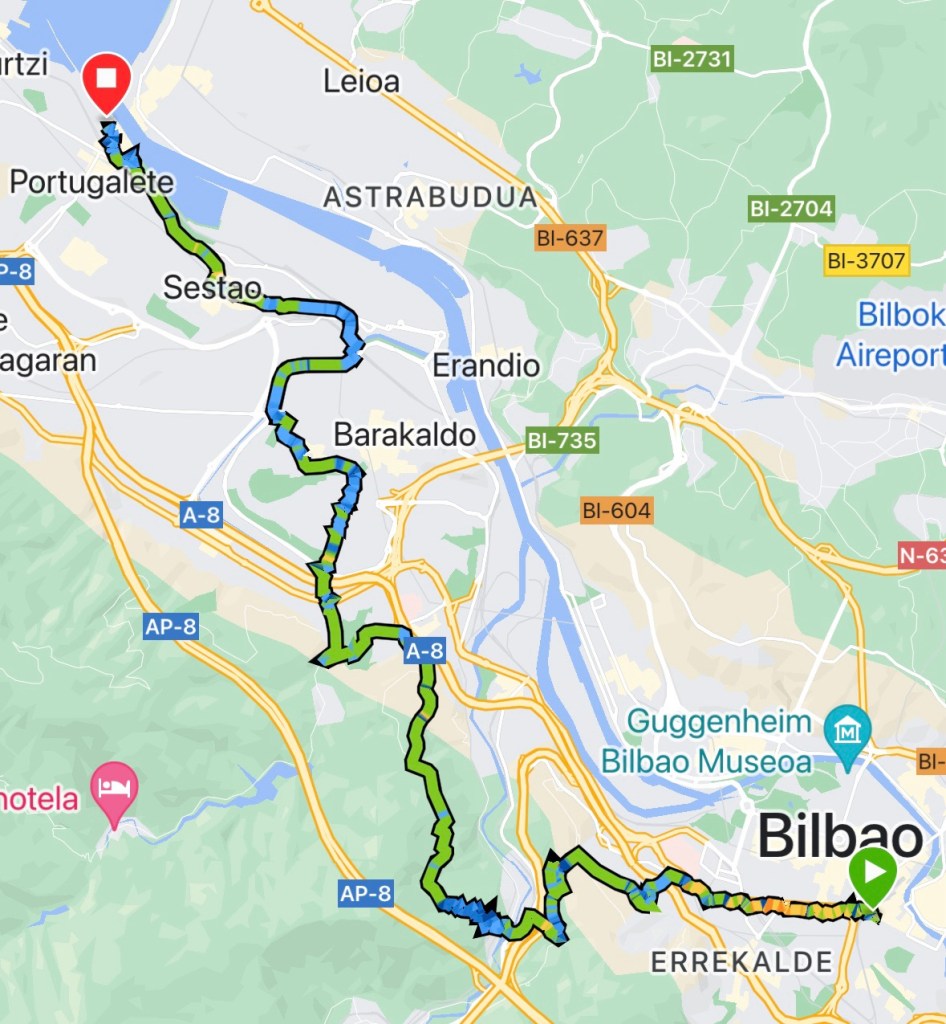
Poncho time again. The rain was still pouring when I left the hostel. The route pretty much follows one of the main roads from east to west of the city.
There was a hive of activity with people walking their children to school and making their way into work – a mass of umbrellas.
Once I reached the west side, the first ascent through a park began. The path was a little slippery and not to repeat my acrobatics from yesterday, I took my time.
At the top, I had panoramic views of Bilbao; the city is huge, it goes way back up the valley, and with the towns of Barakaldo and Sestao that all seem to merge into one, it is like one huge urban mass.

The way then dips down to a small industrial village then back up a winding road for the second and last-ish hill of the day. From here you can truly see the extent of urban mass.
It was a relatively gentle descent into Barakaldo. Outside a bar, two back packs were propped up against a chair – pilgrims!
I called in for an ‘Aquarius’ and a tortilla y potata. Sat at the bar were two familiar faces from the last week – I got chatting with them.
Ronni from Isreal and Jürgen from Germany, I had seen them a few times since Irún, but this was the first time I had talked to them. They are both going all the way to Santiago.
The route follows the banks of the Castanos Erreka, there seemed to be a steady stream of large fish swimming up the middle of the river – absolutely loads of them.
After crossing the river, the Camino rises up past a train station and through Sestao. Another hive of activity with people going about to their business. It then gives a lofty views of the river Nerbiol Ibaia – the huge river that goes from the coast to the Bilbao.
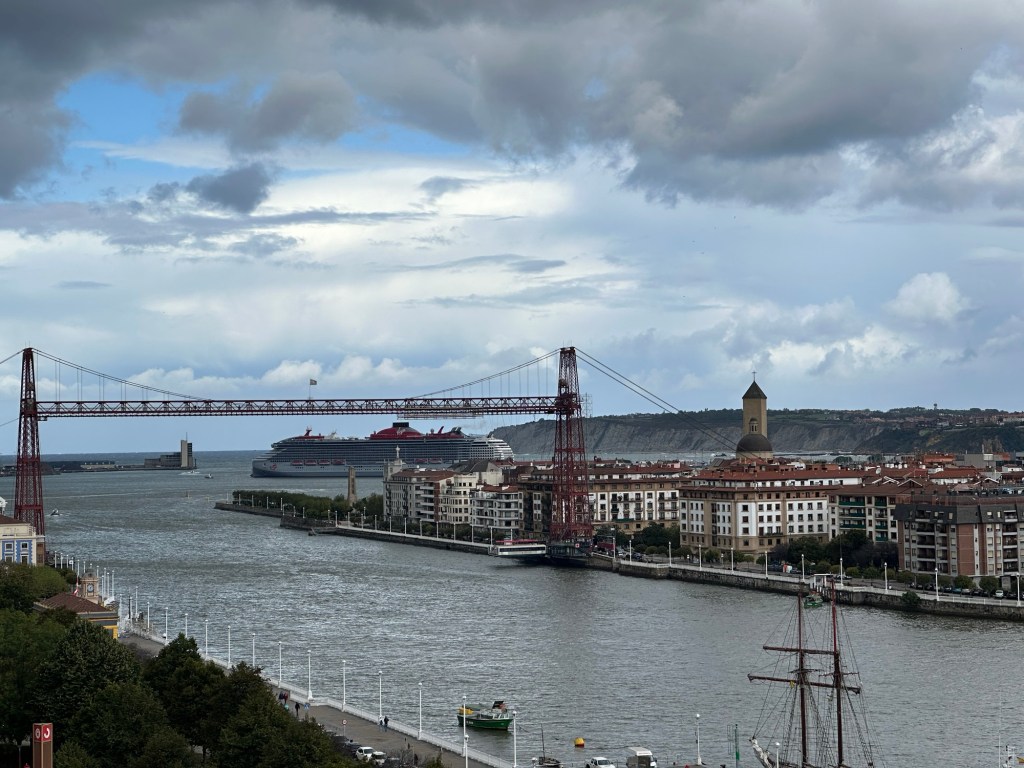
A short walk later I was in Portugalete the end of today’s stage. The town is famous for it’s transporter bridge, an engineering marvel of its time that formed the basis of many similar bridges across the world.
 Stu's Camino